
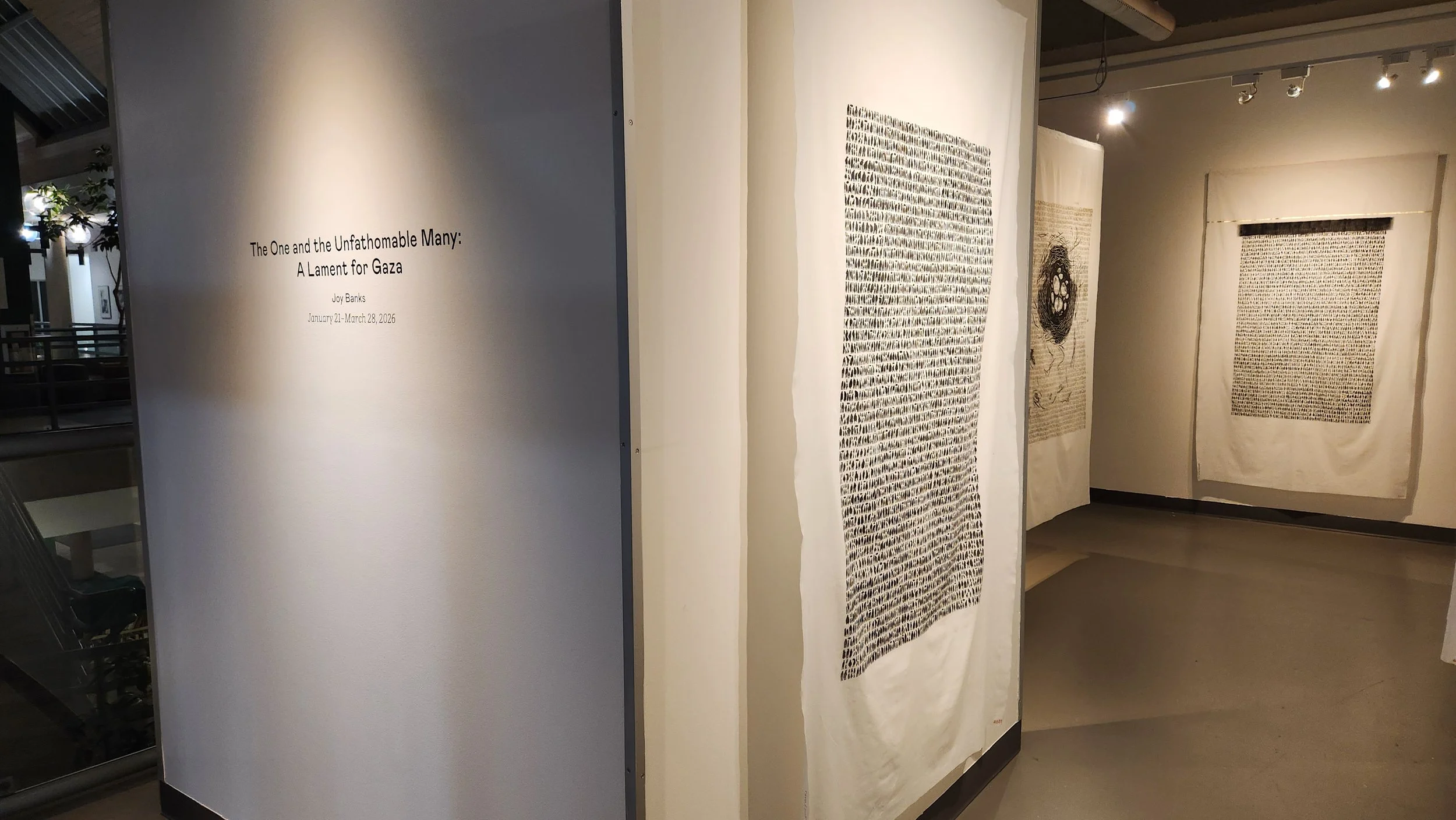
The One and the Unfathomable Many: A Lament for Gaza
A traveling exhibition….
First exhibited at Dal Schindell Gallery, Vancouver, in 2026. Now available for exhibition at other venues.
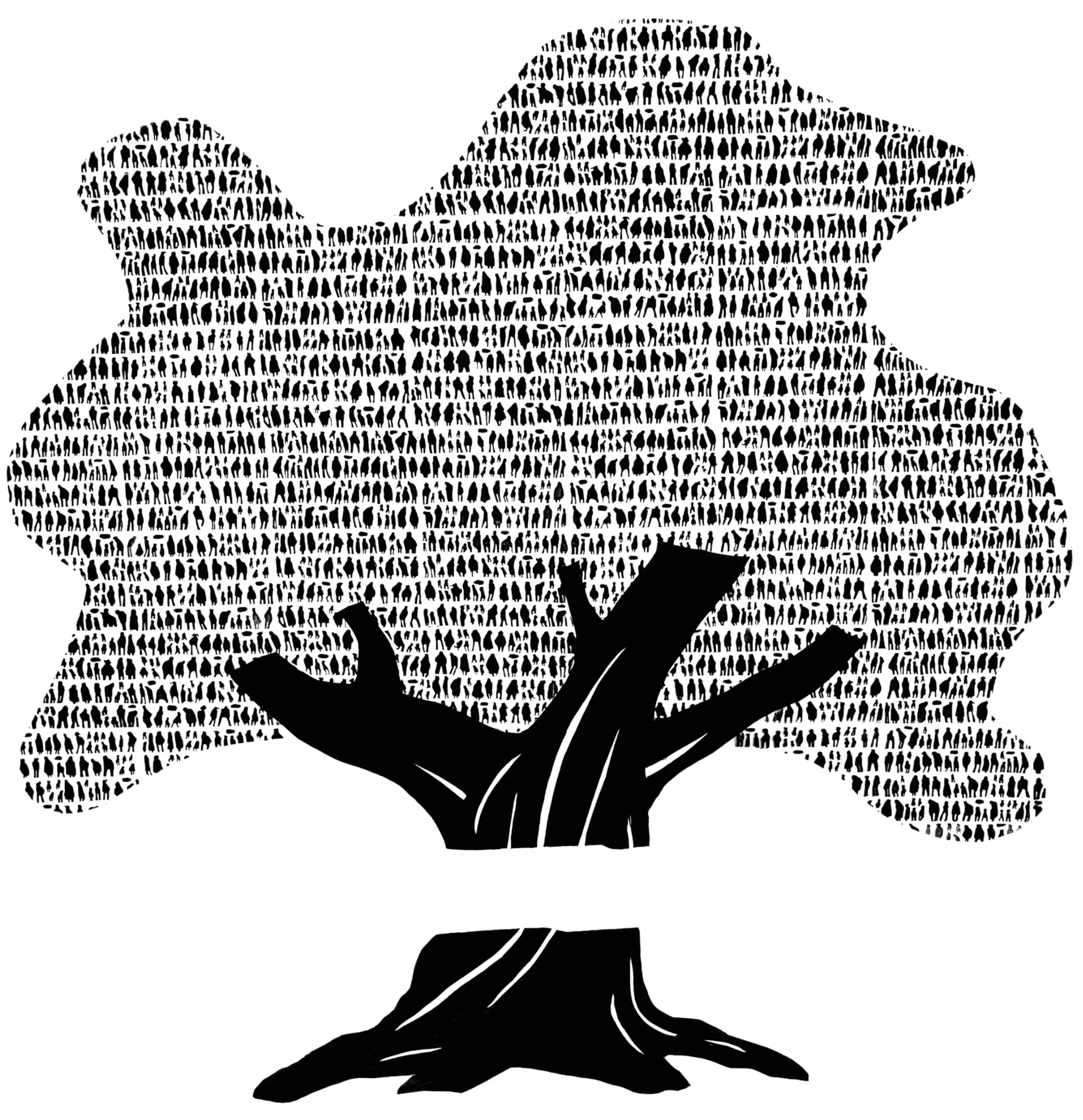
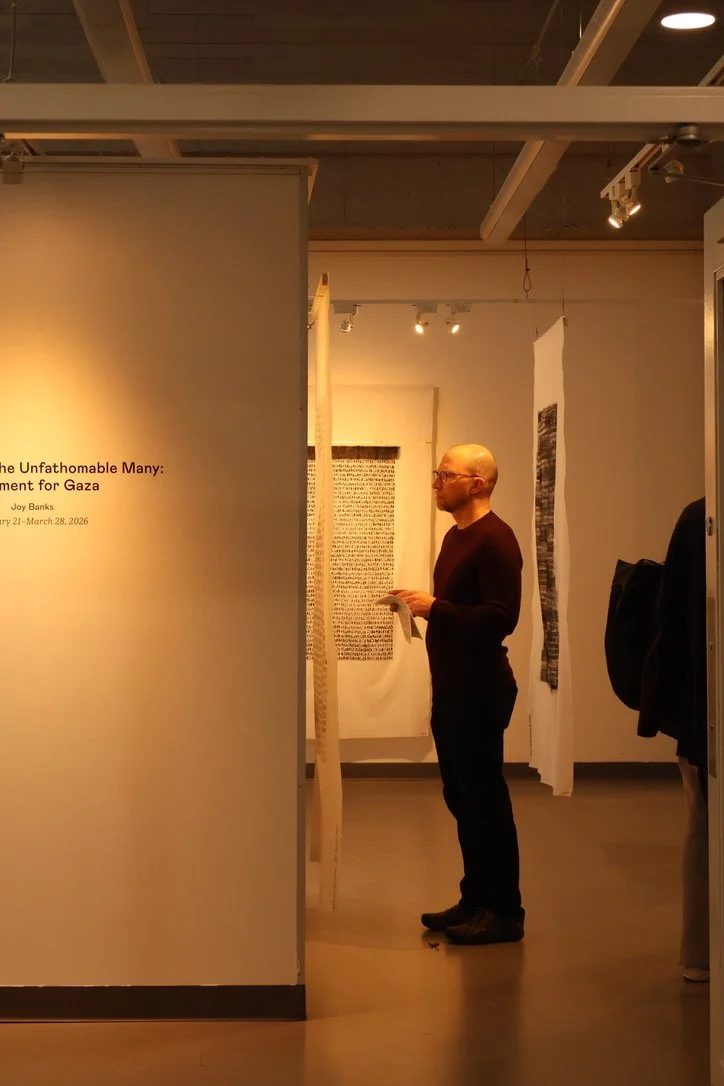
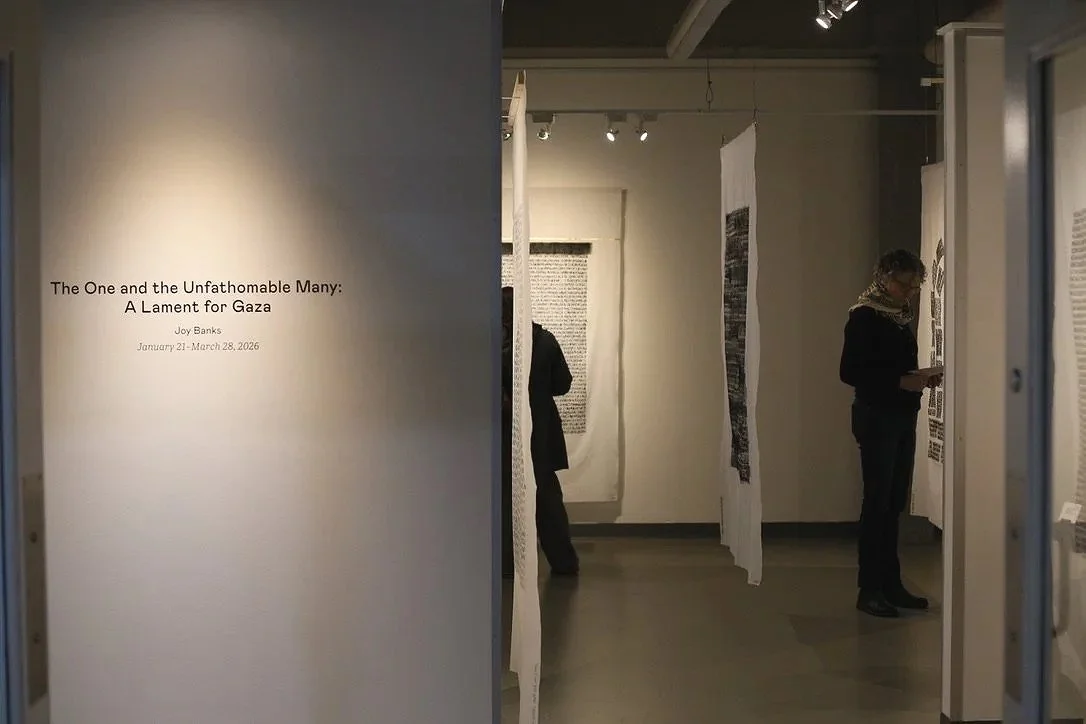
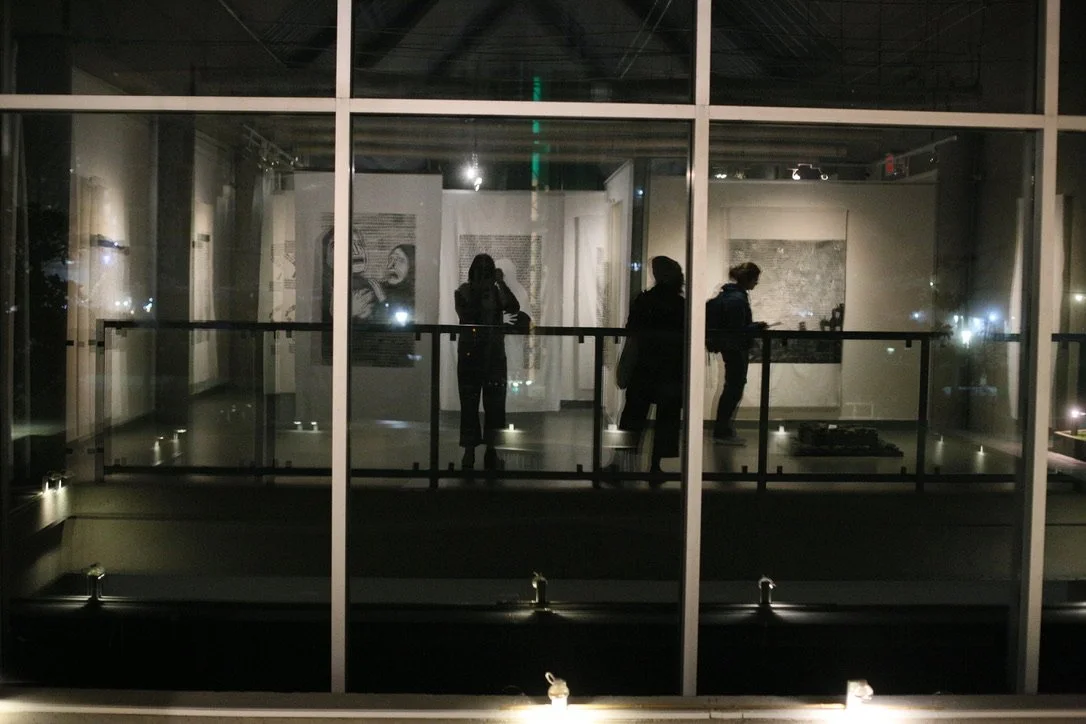
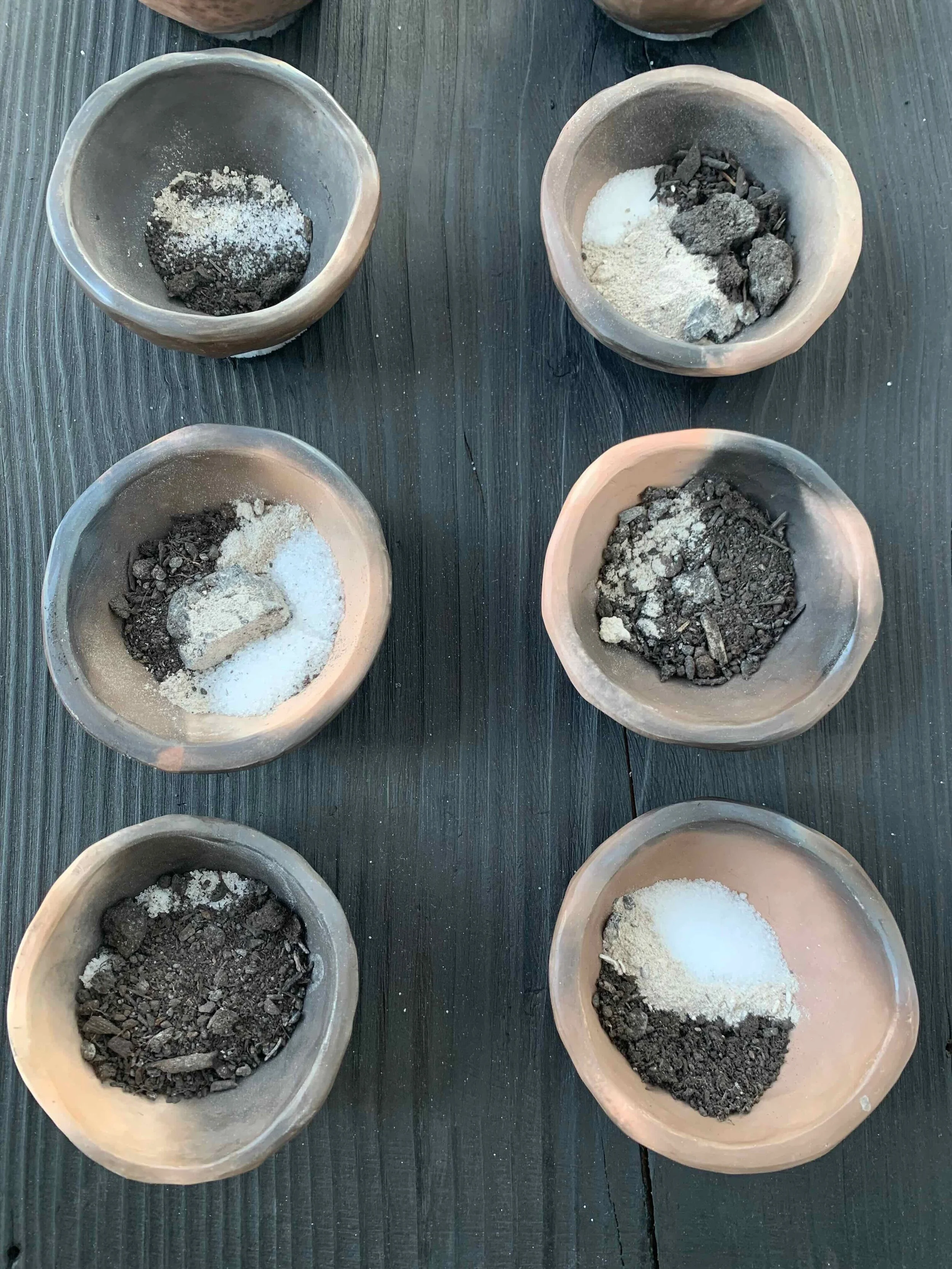
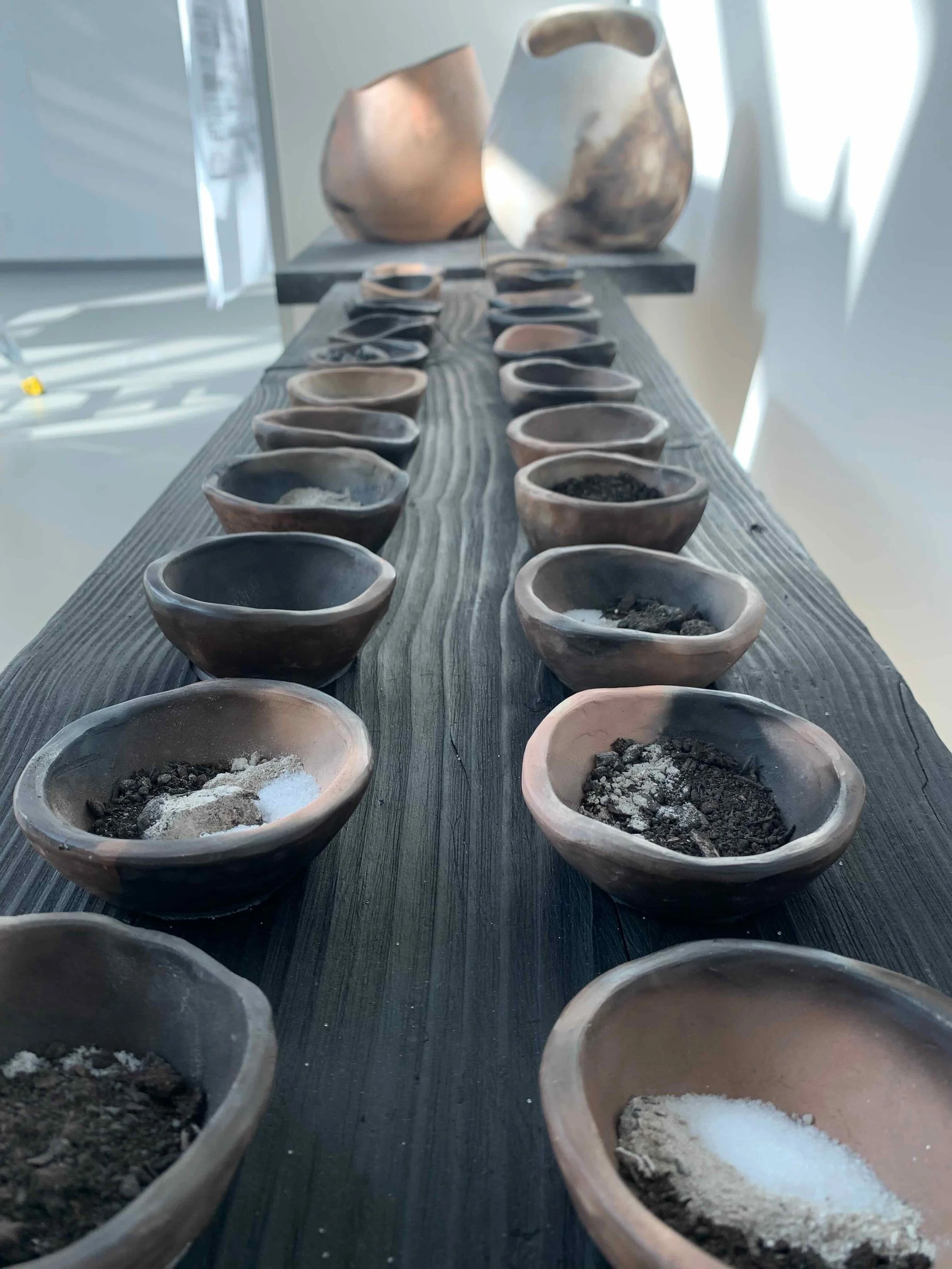
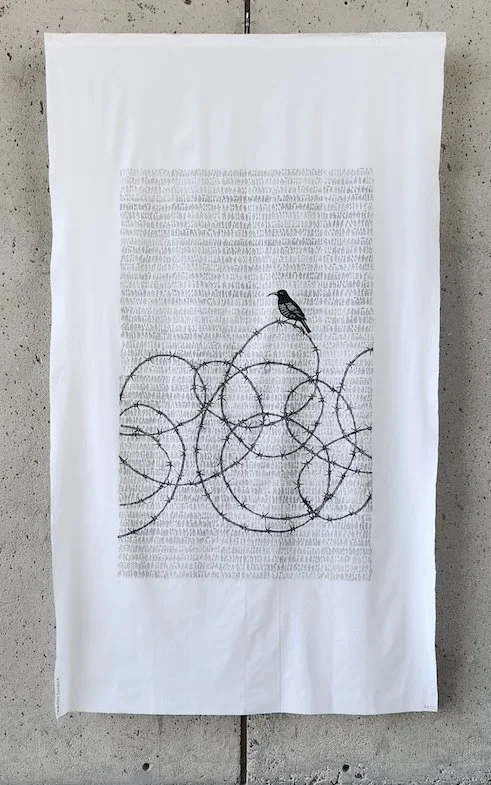
Bringing together printmaking, carved wood, and pit-fired ceramics, this installation seeks to create a space of shared lament for Gaza. Hanging fabrics printed with over 65,000 figures, representing the number of Palestinians killed, form a grief-labyrinth to walk through, inviting visitors to witness, grieve, and engage with the scale and impact of the genocide.
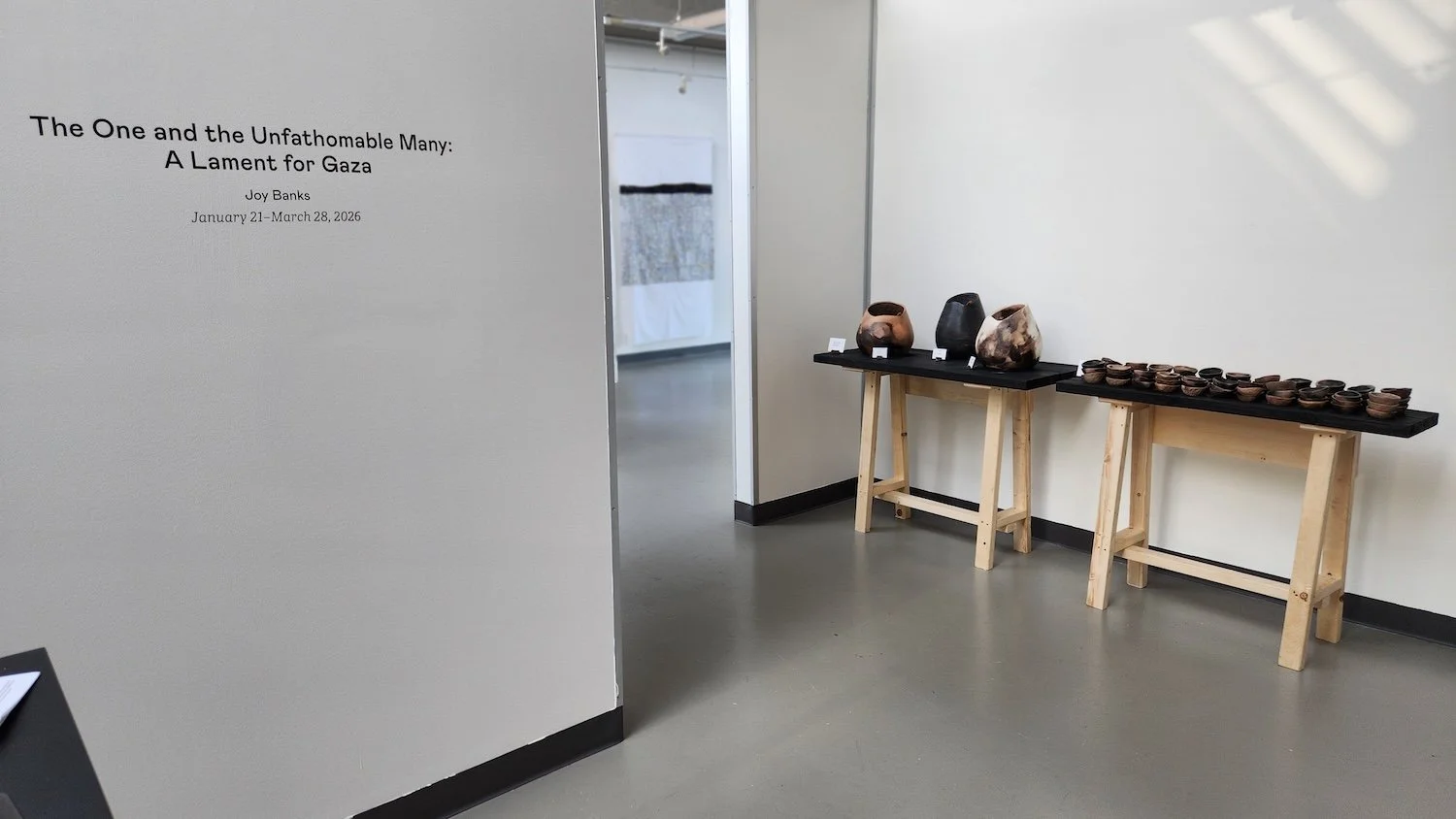
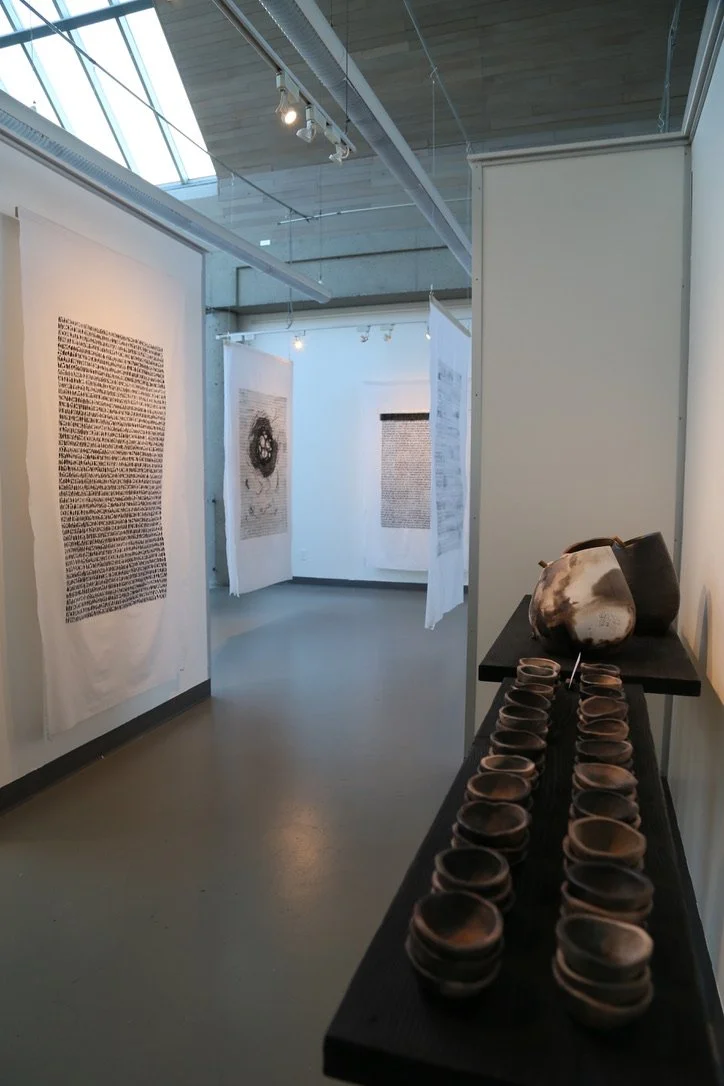
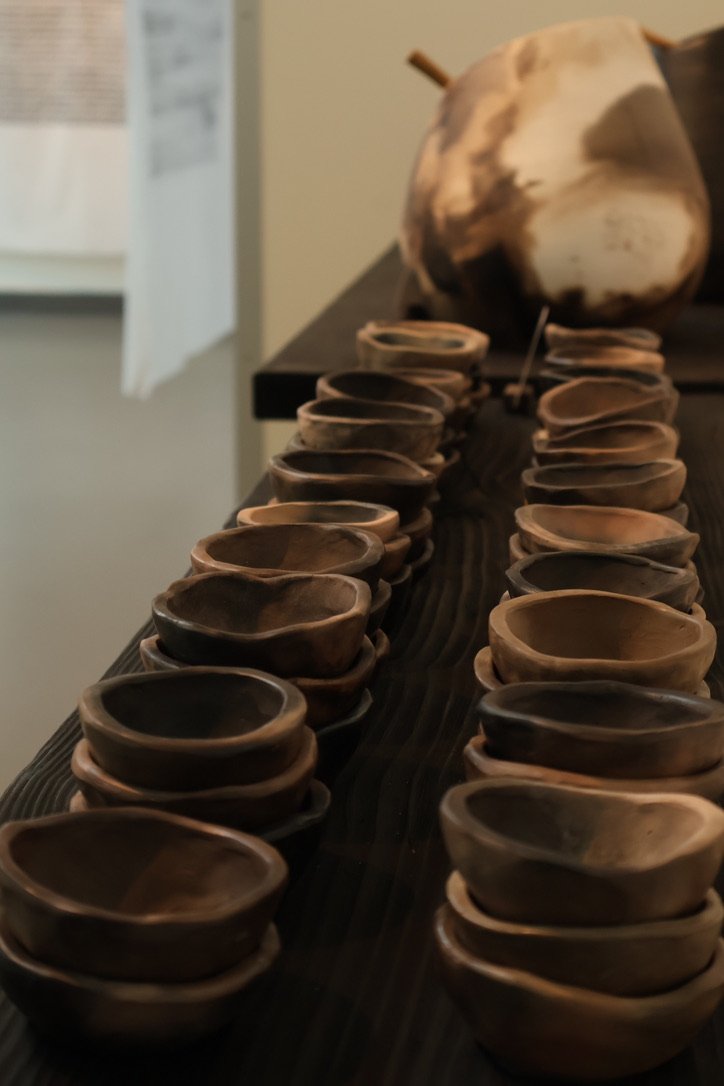
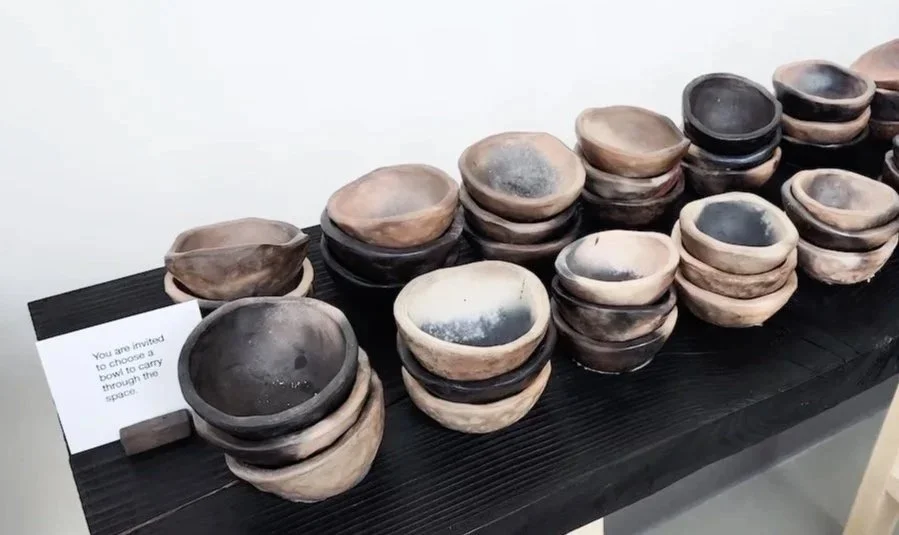
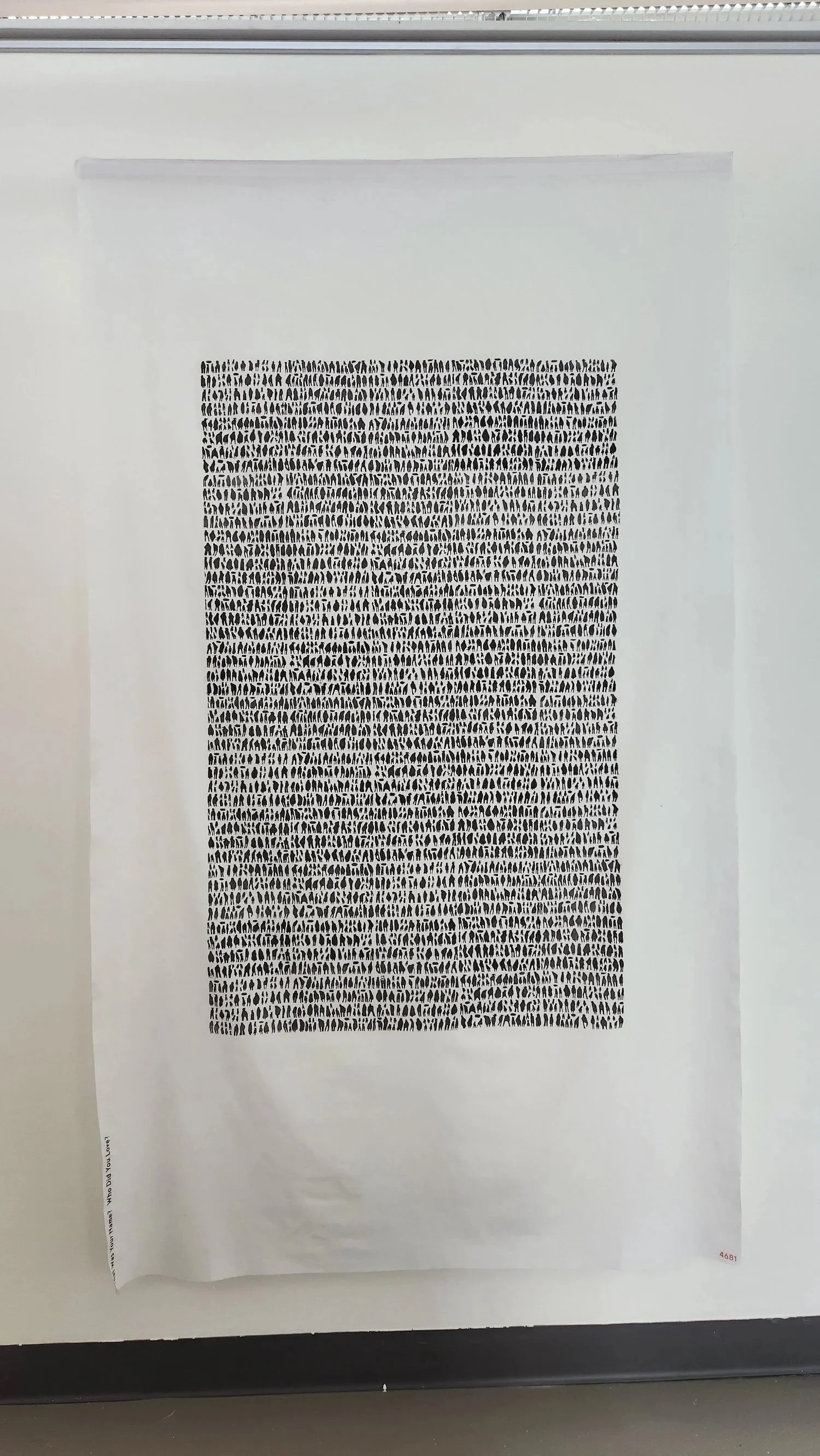
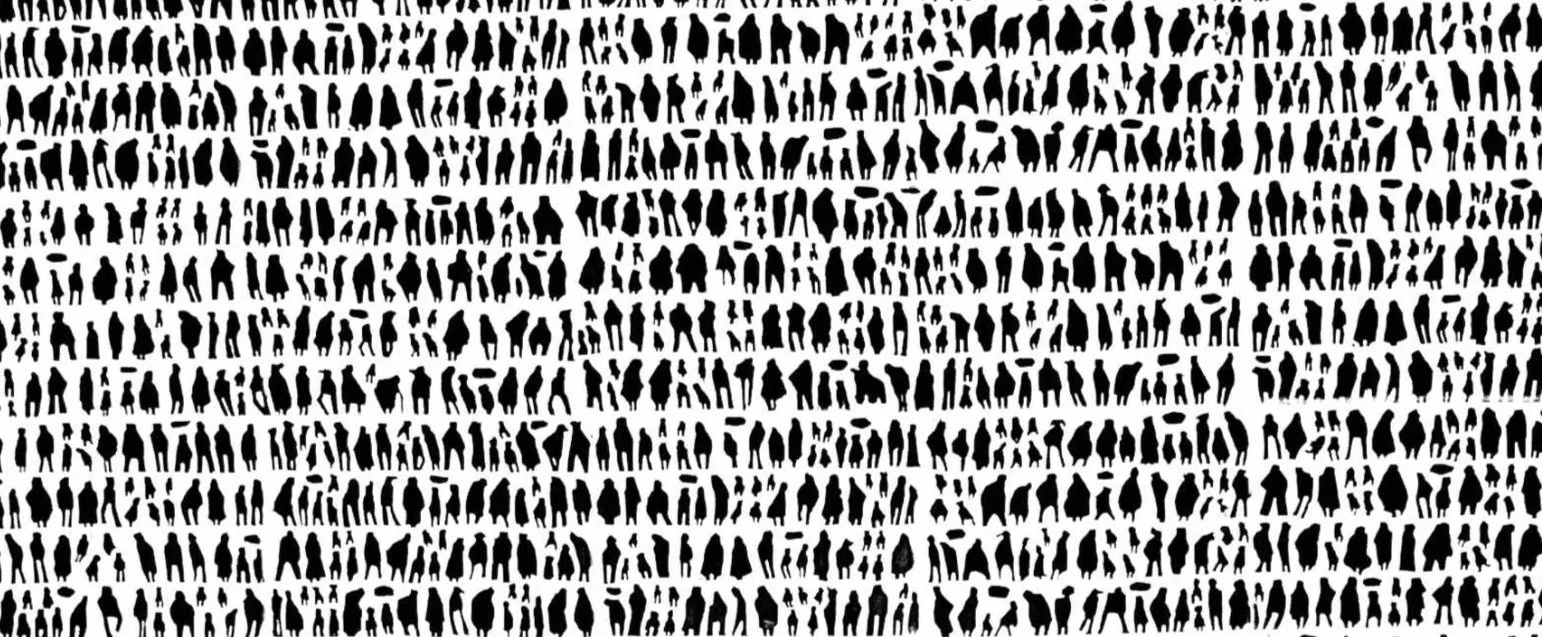
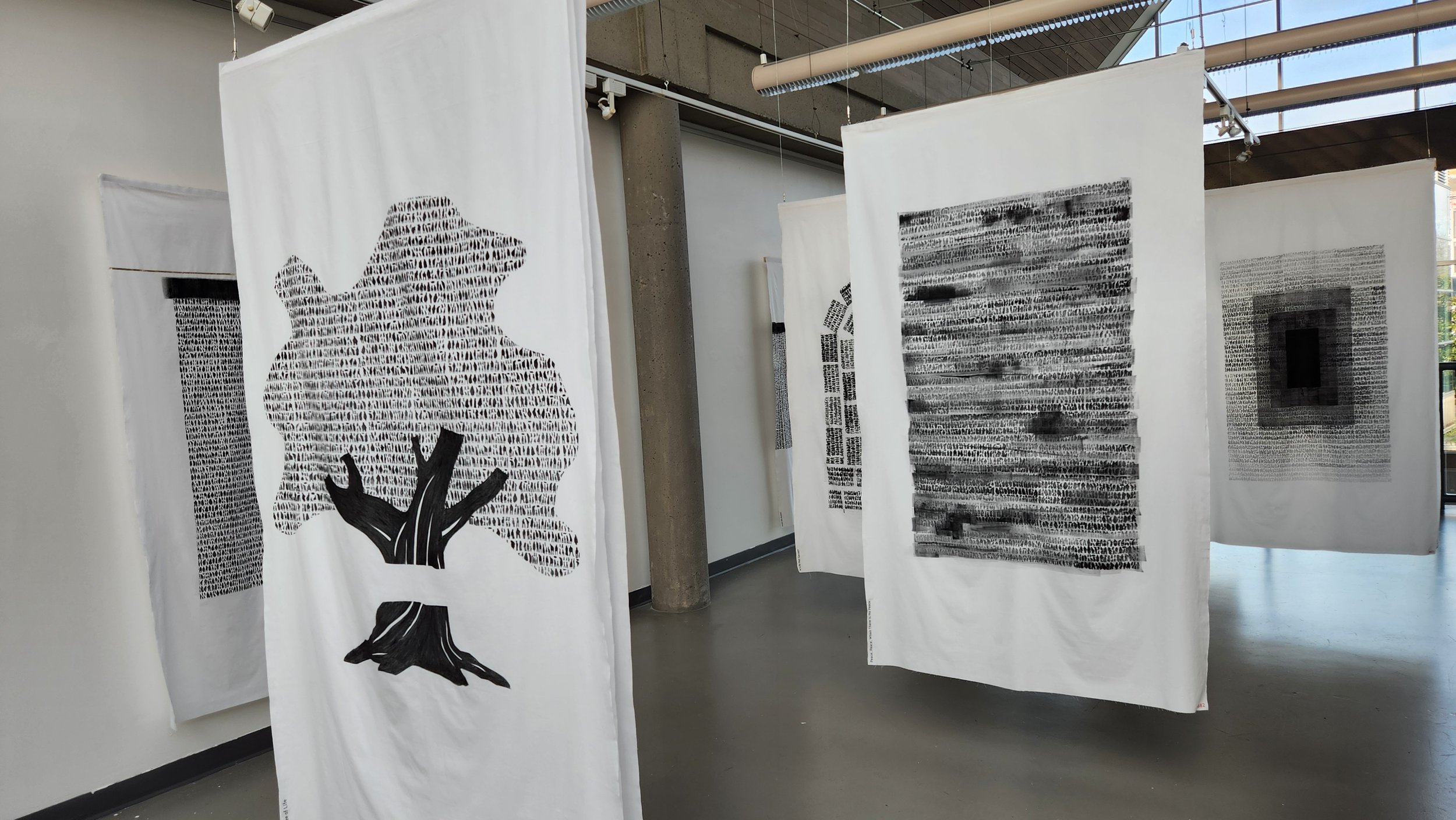
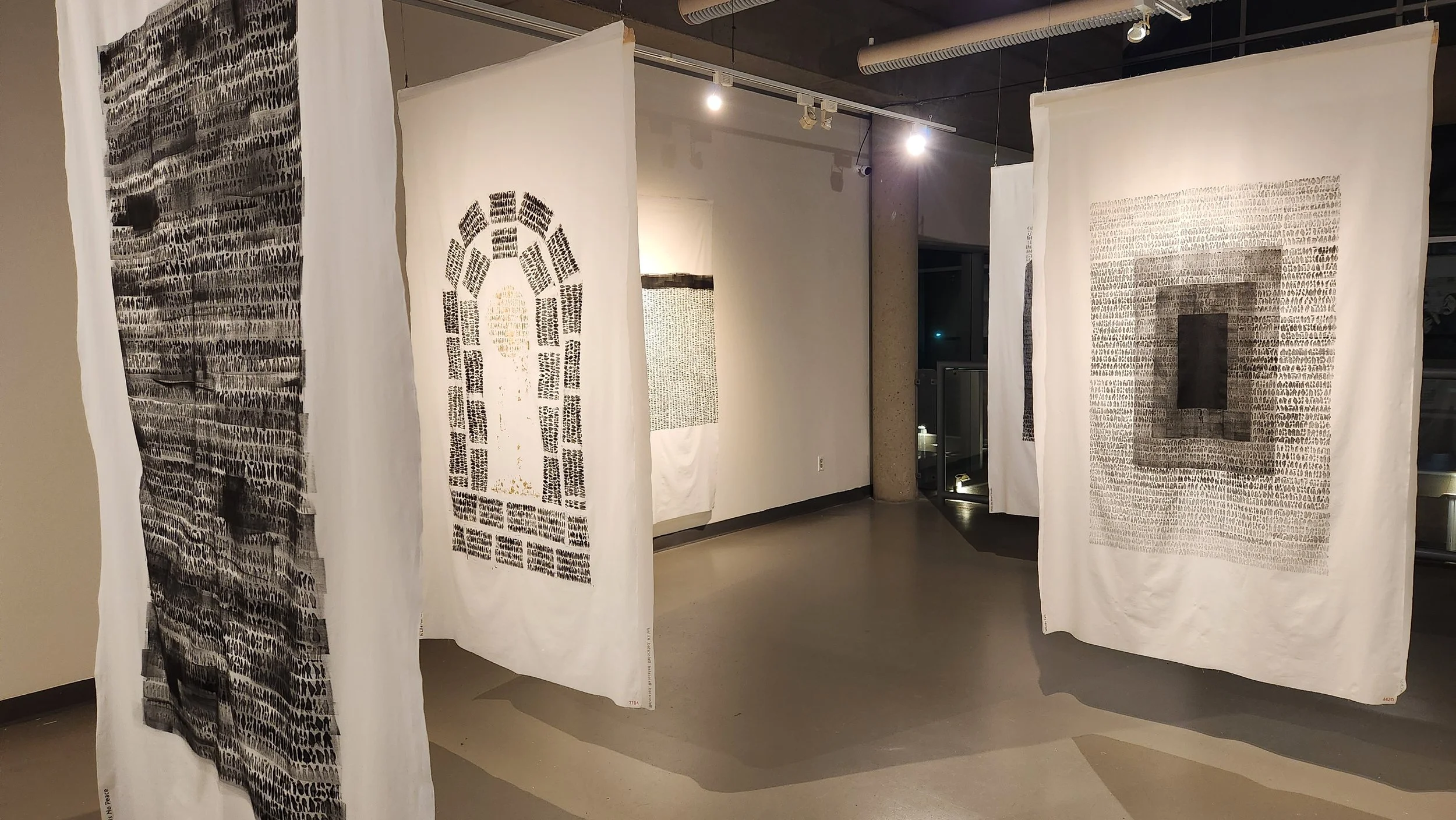
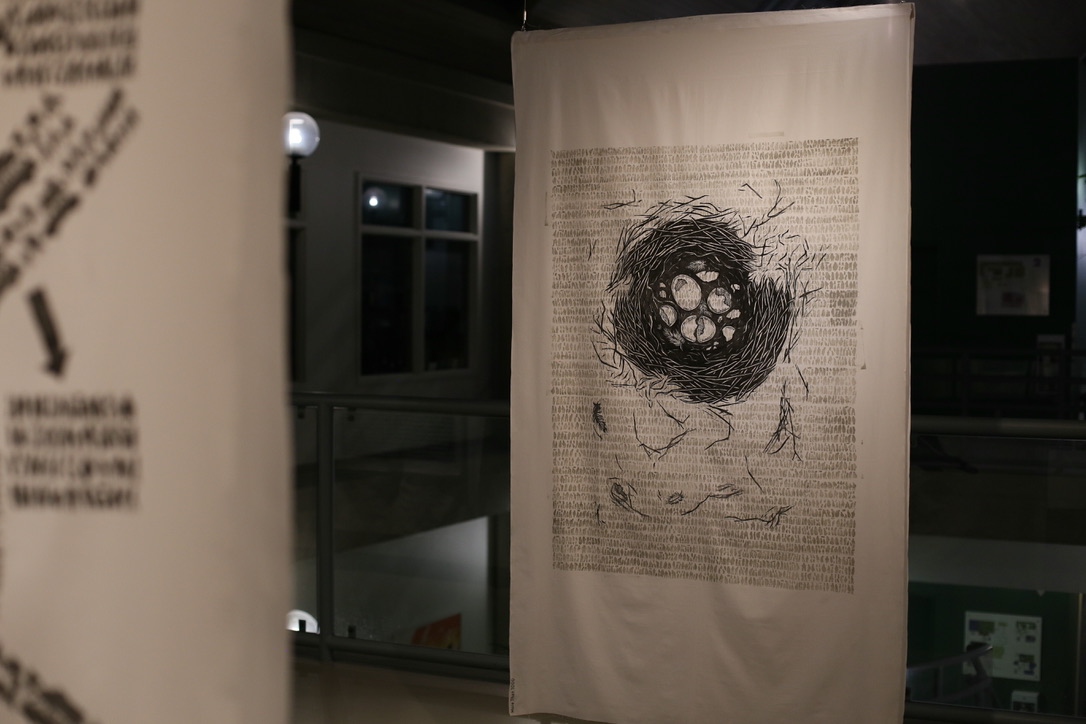
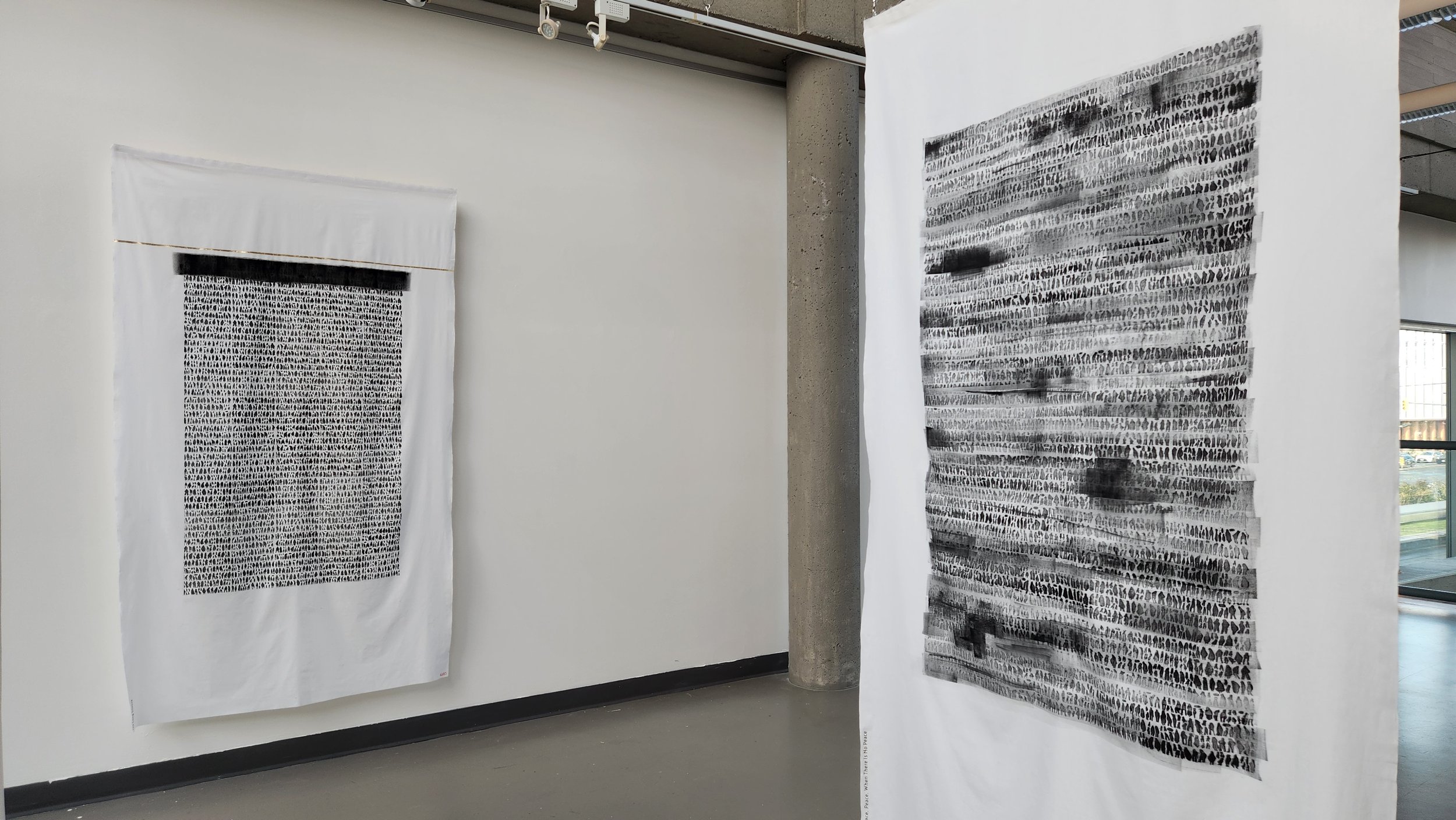
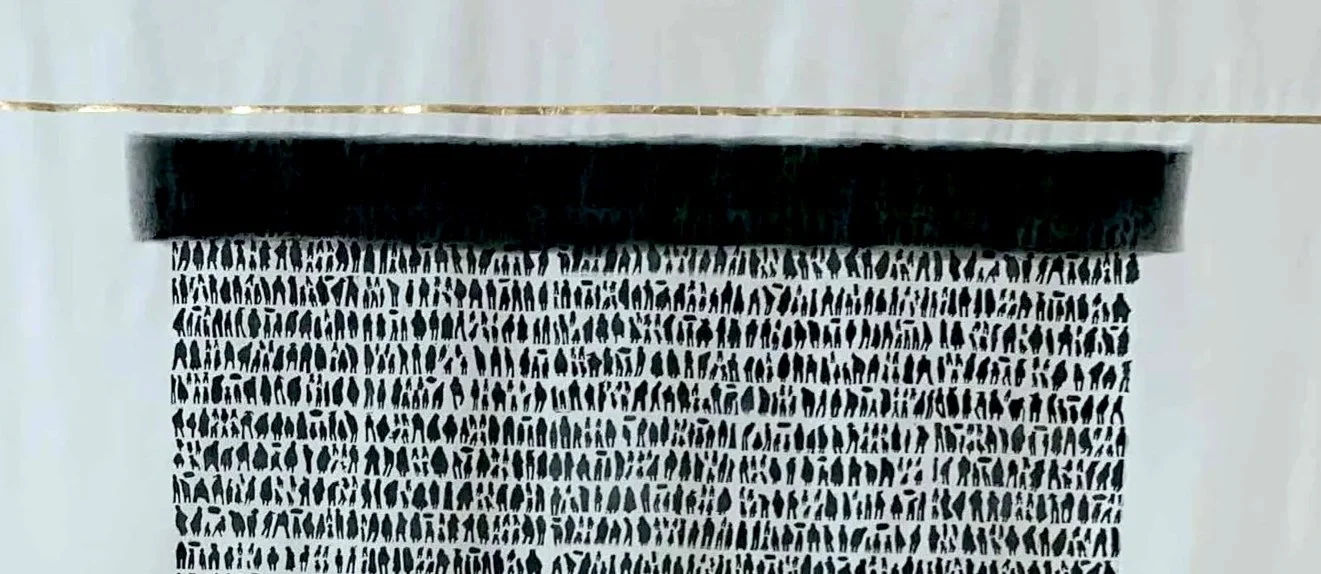
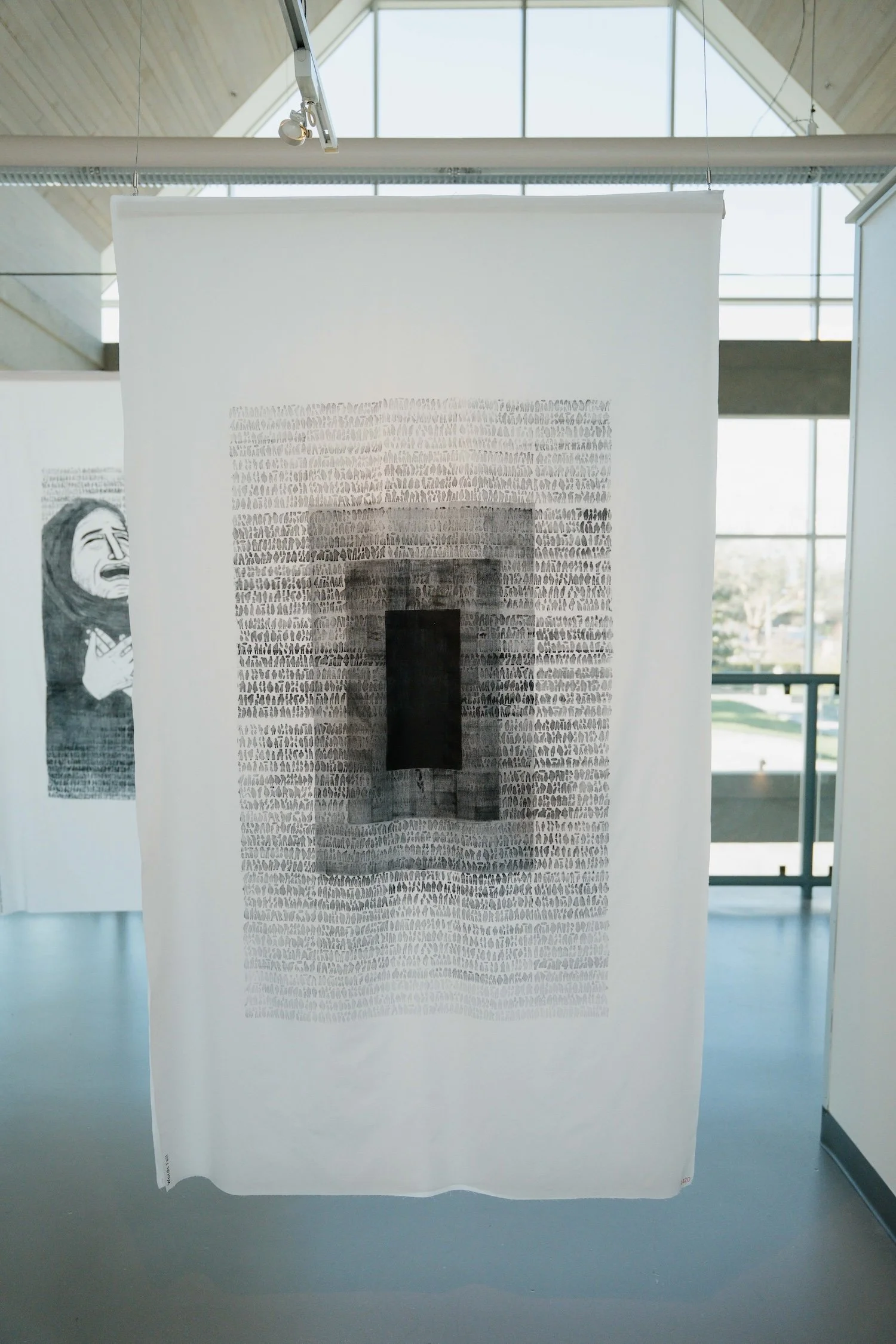
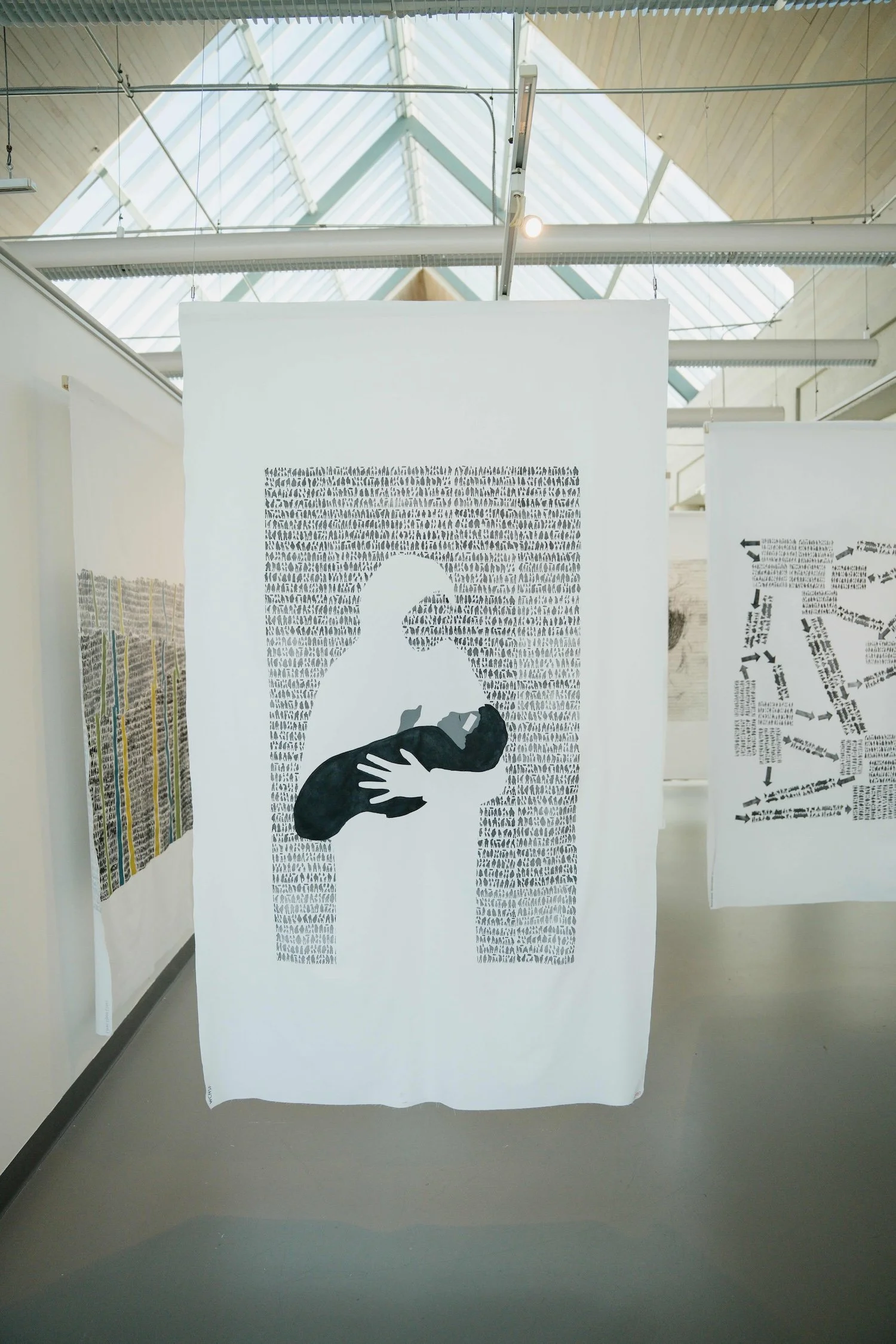
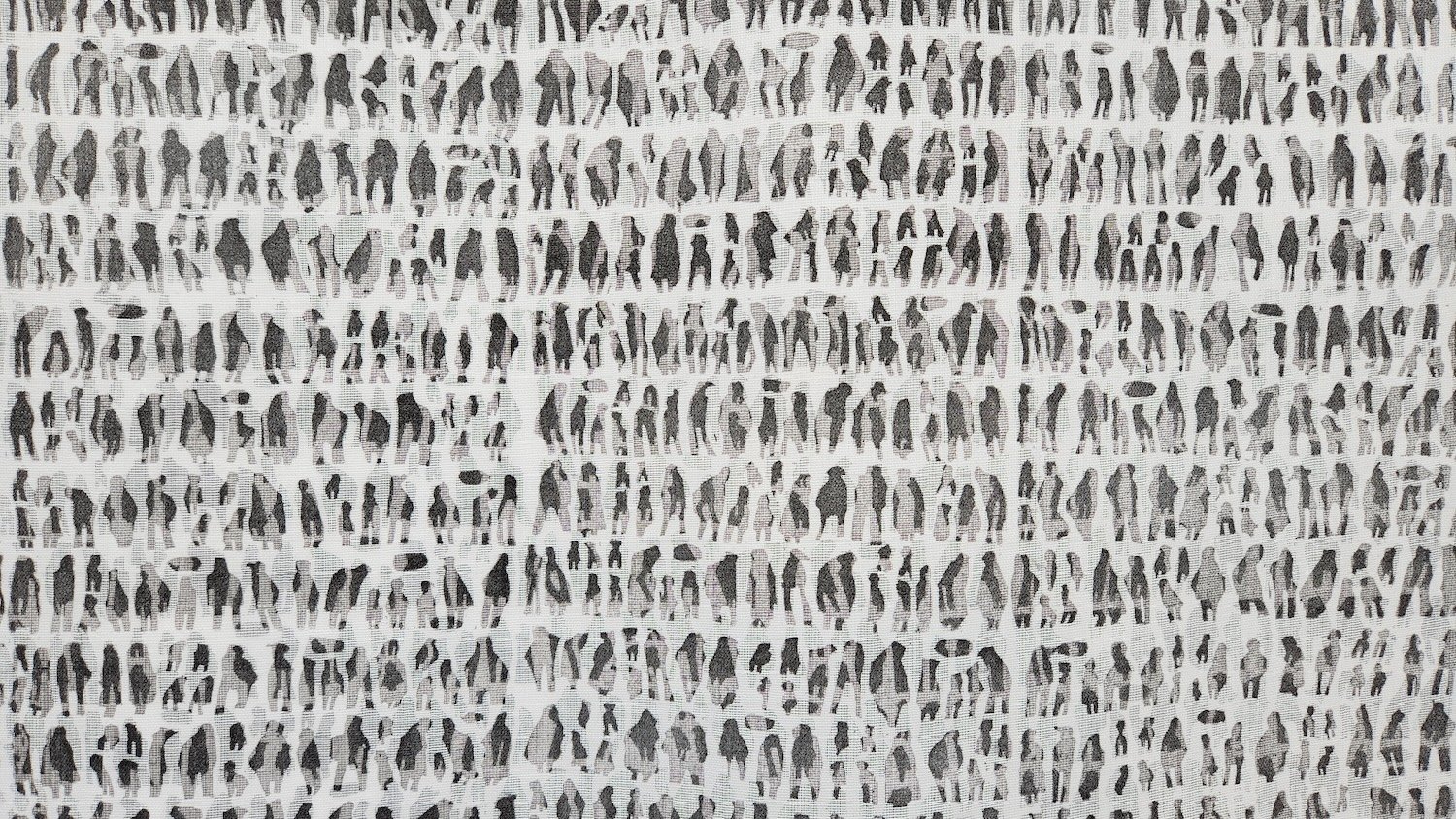
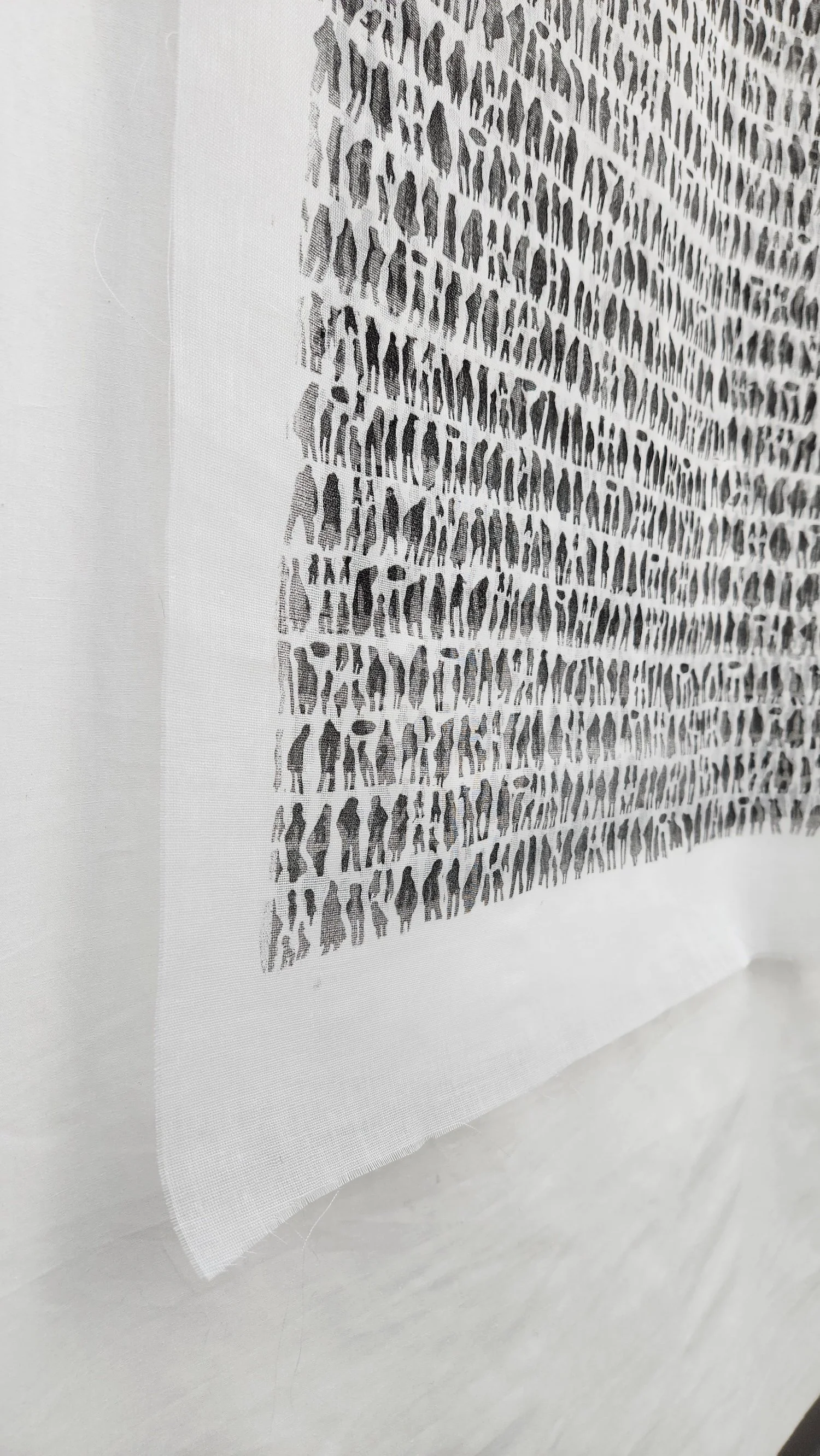
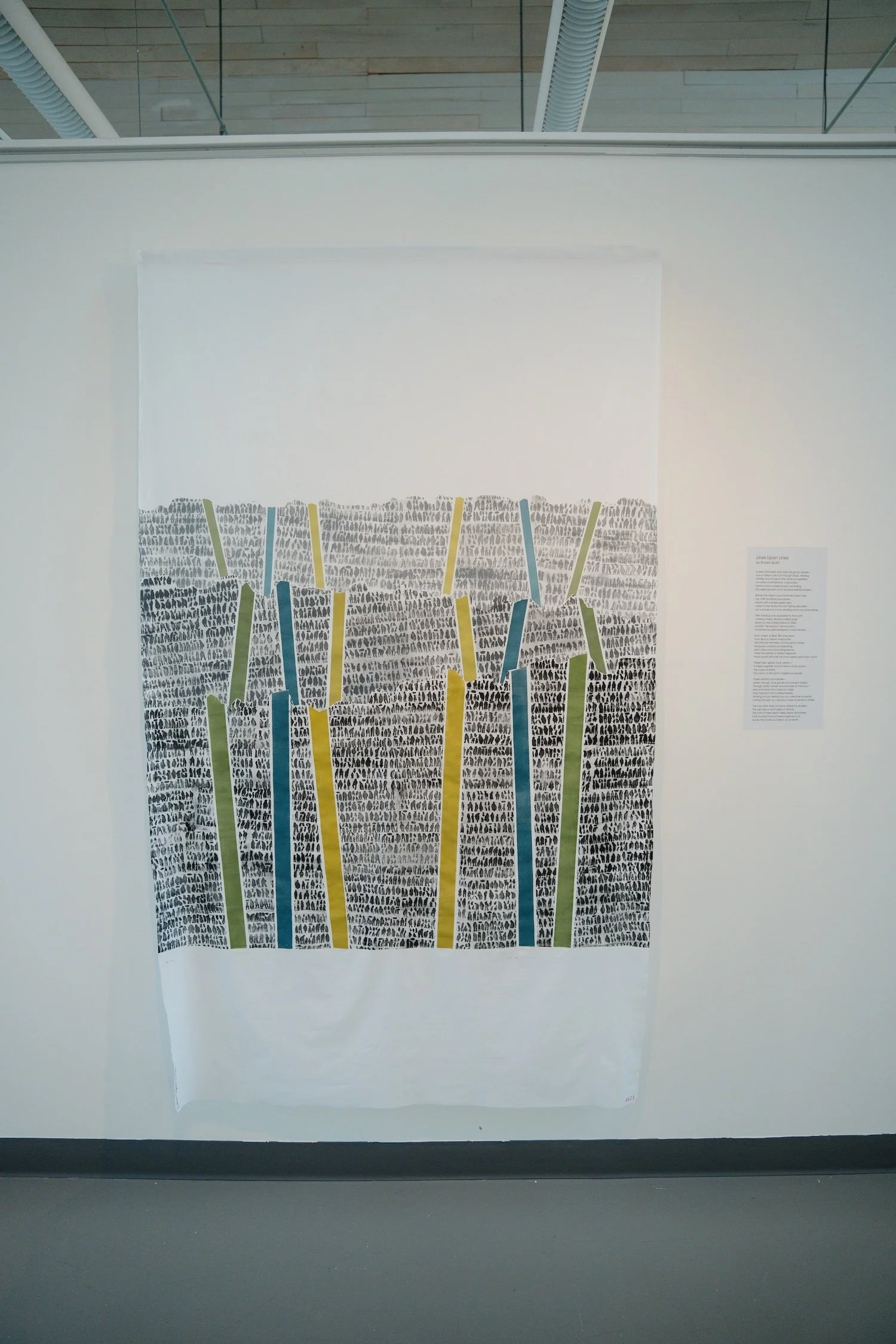
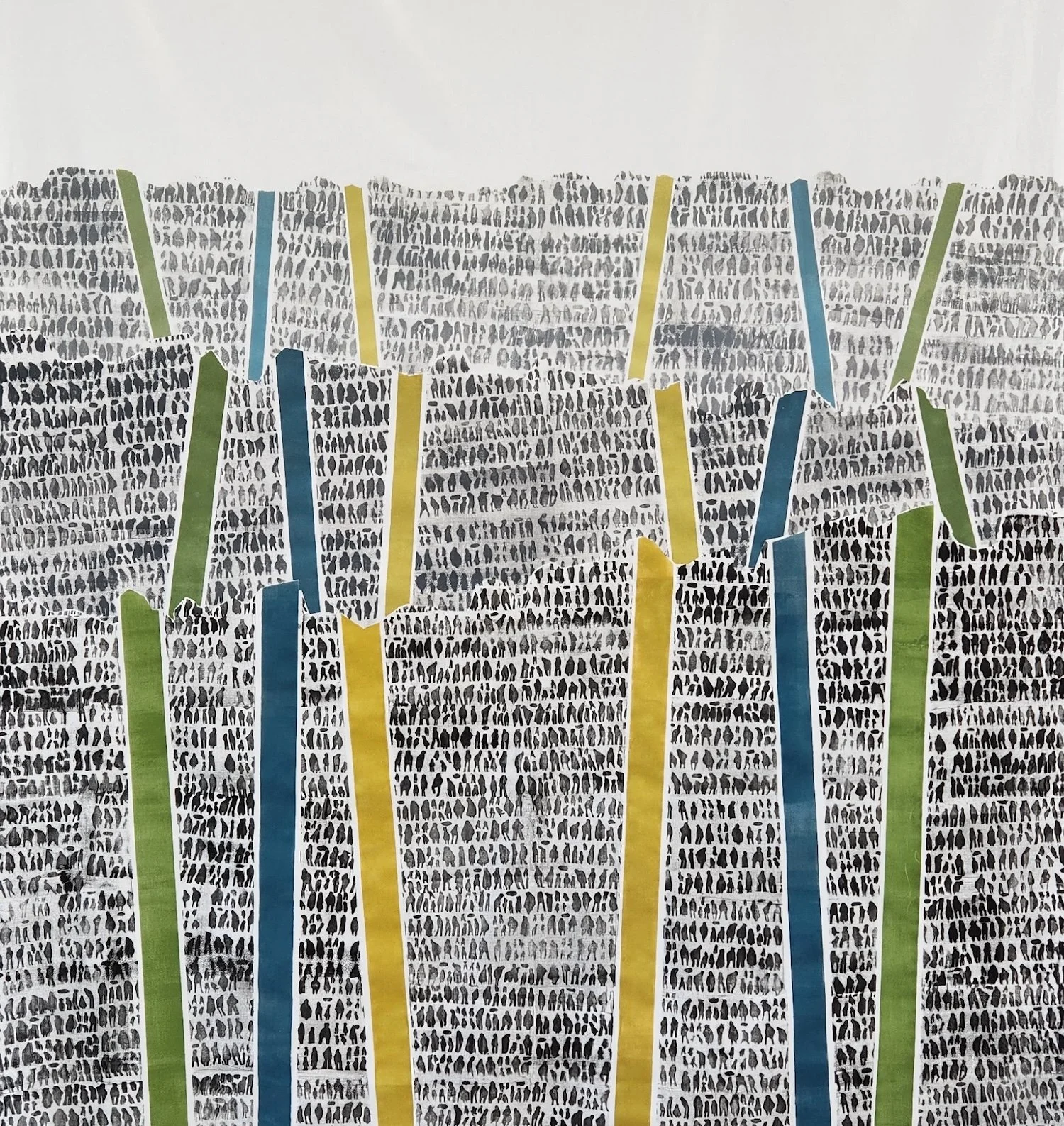
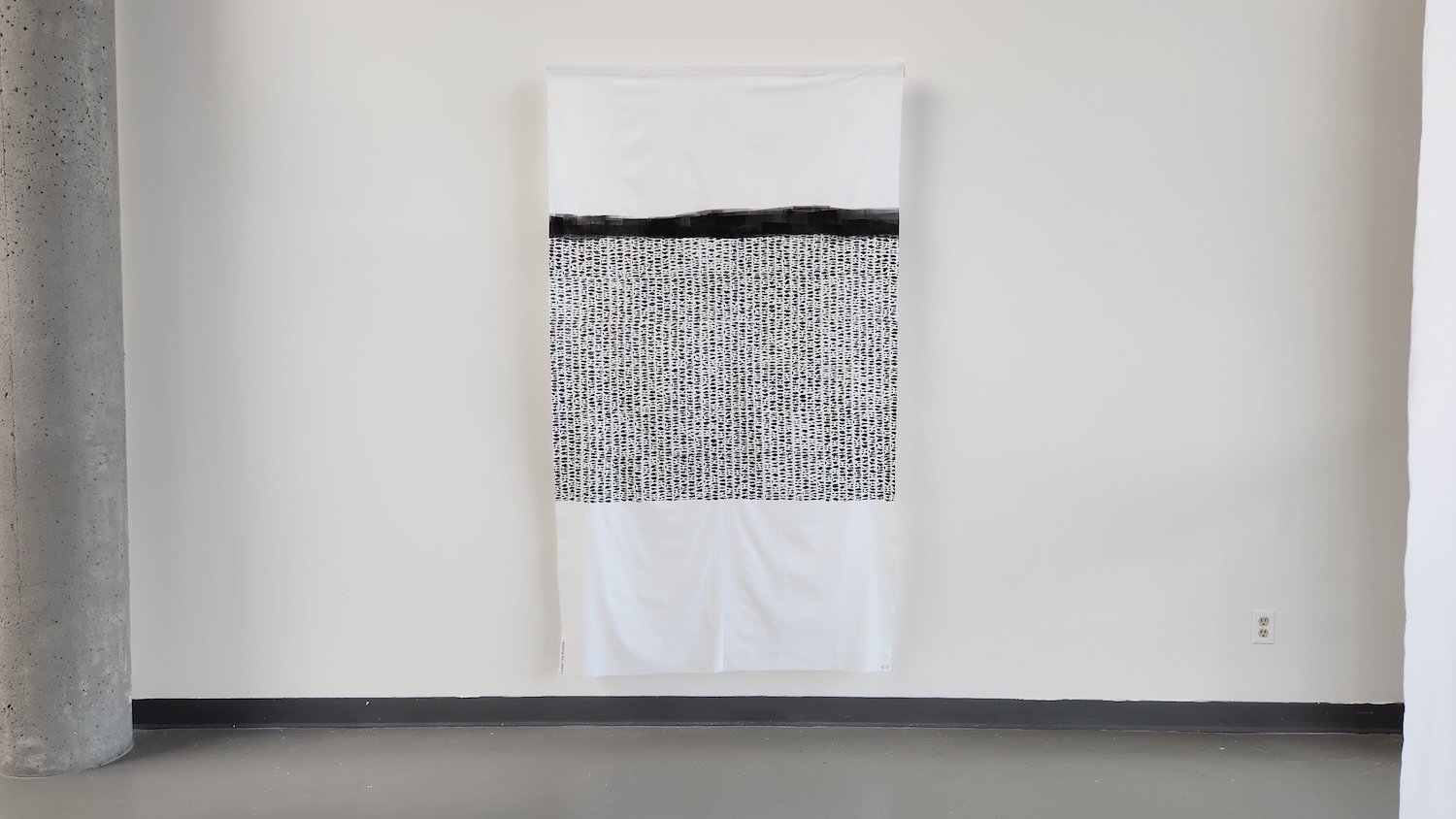
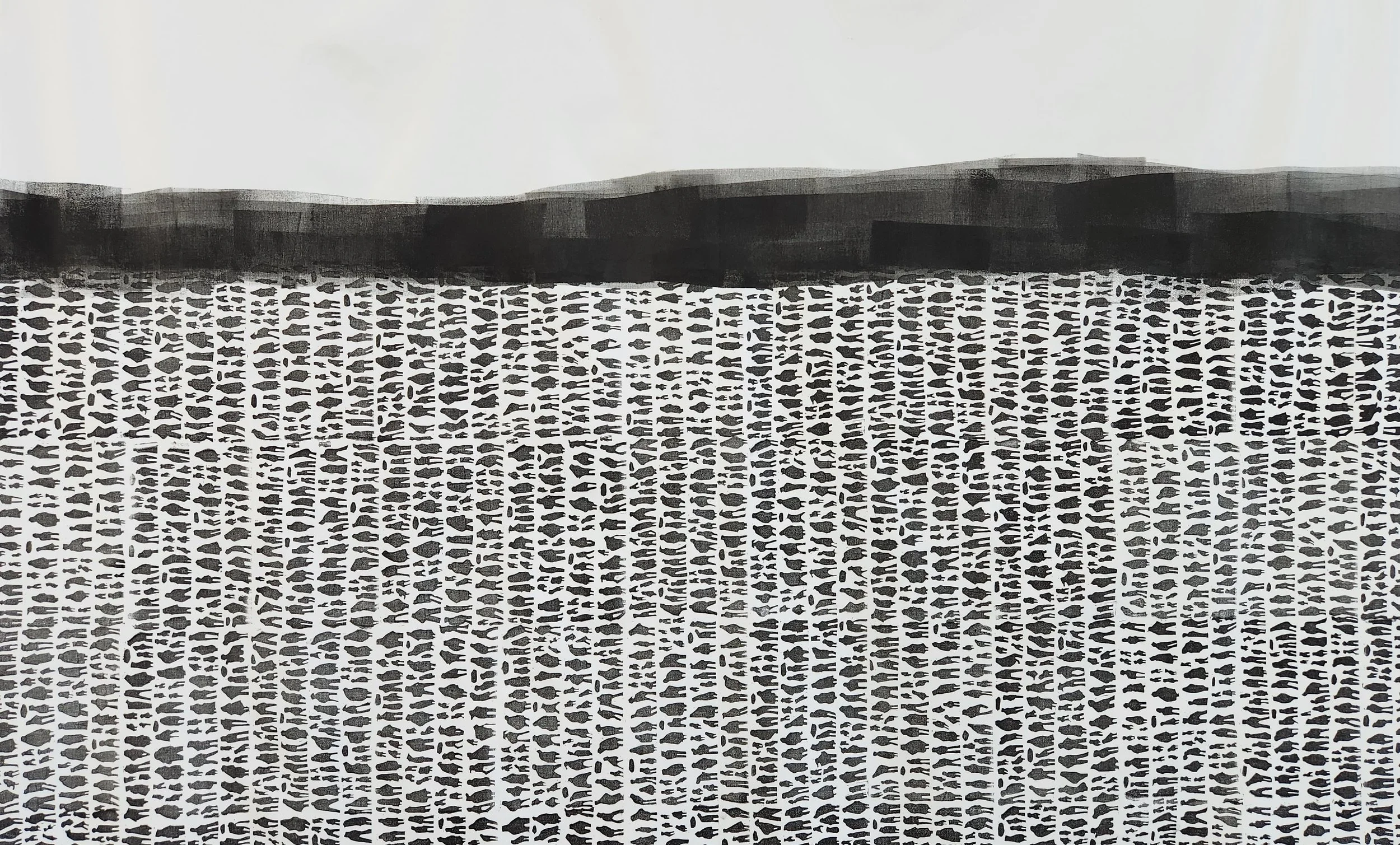
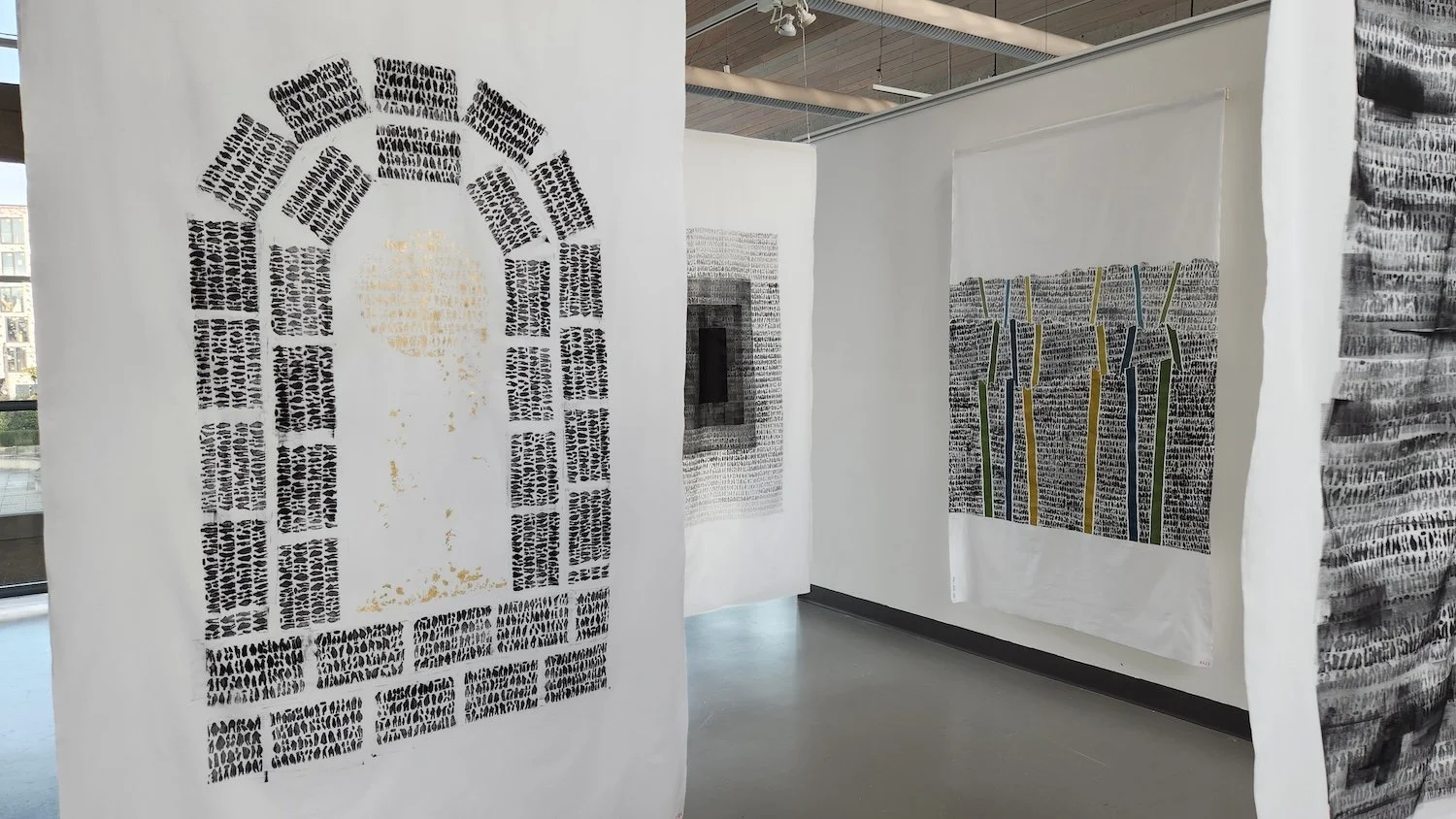
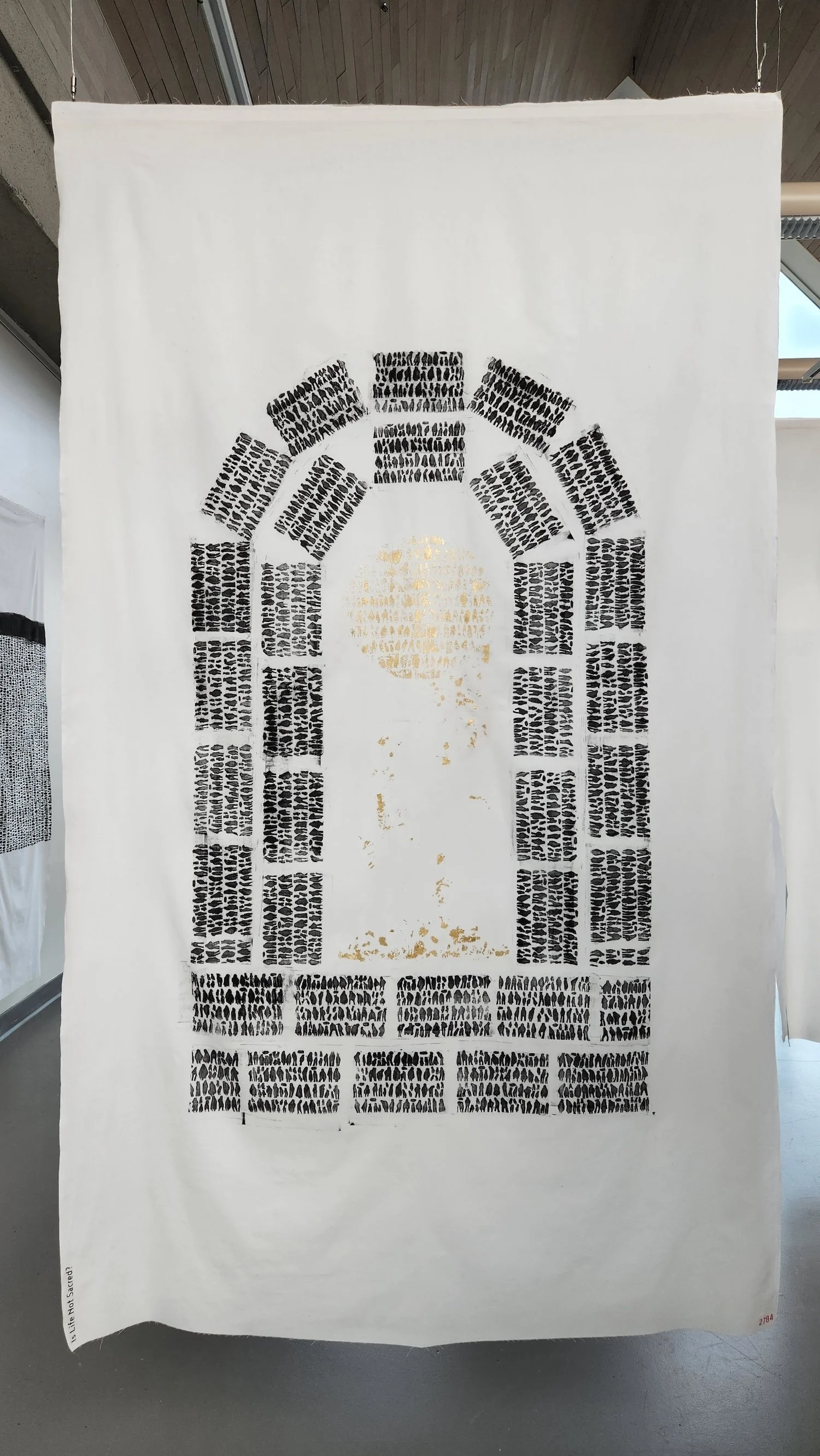
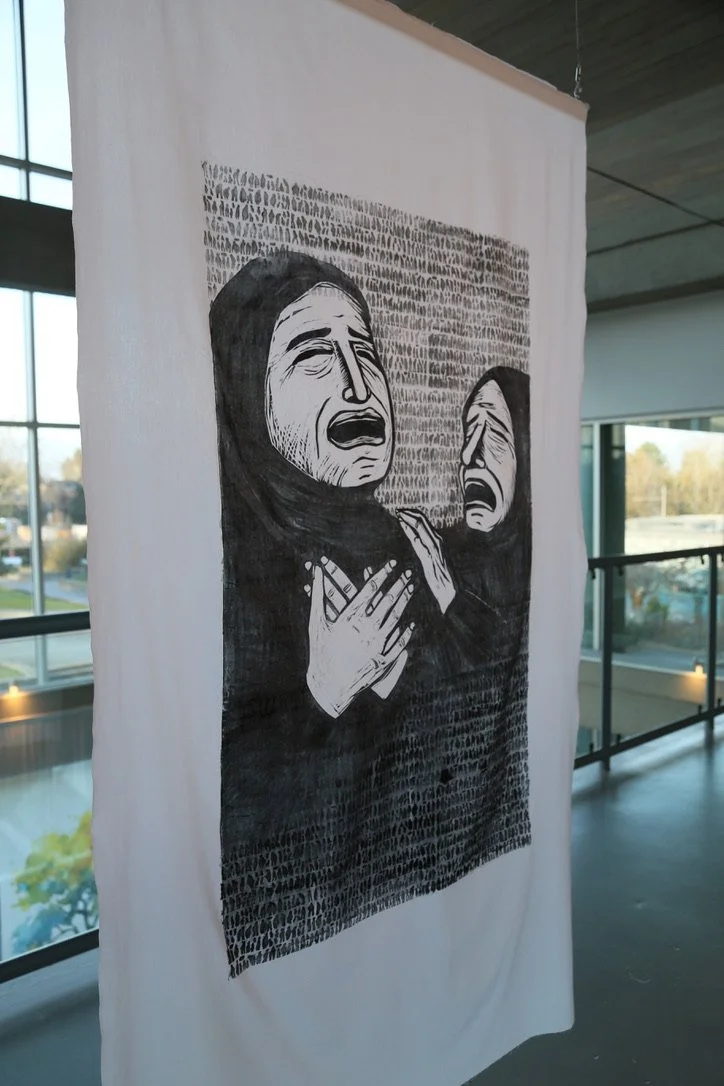
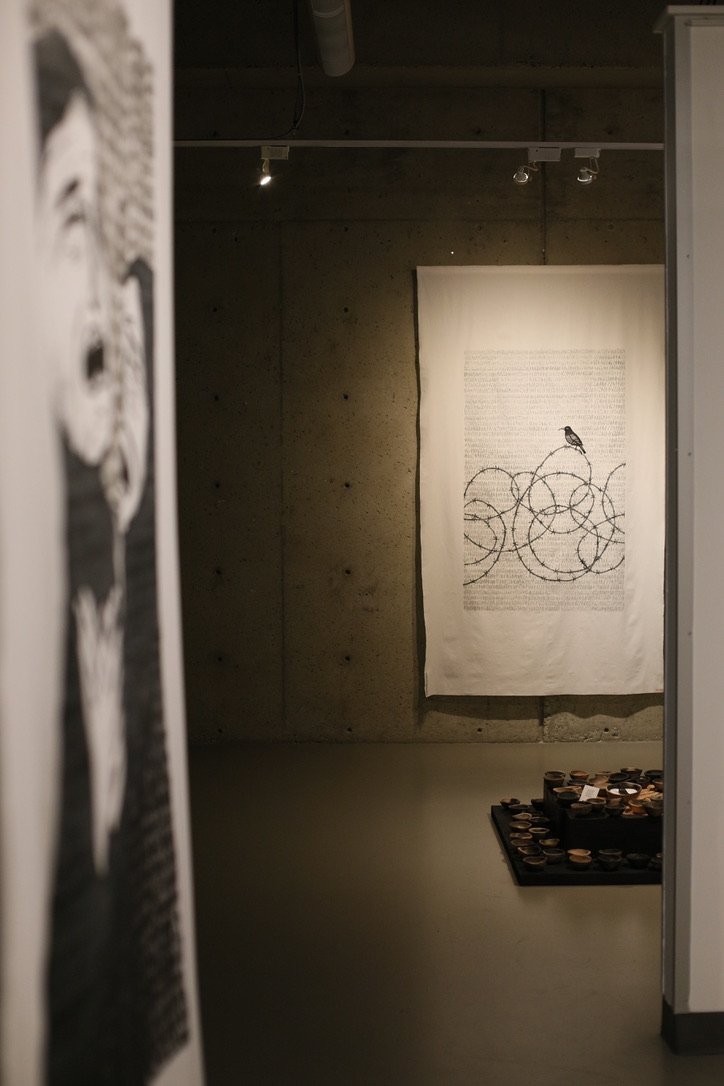
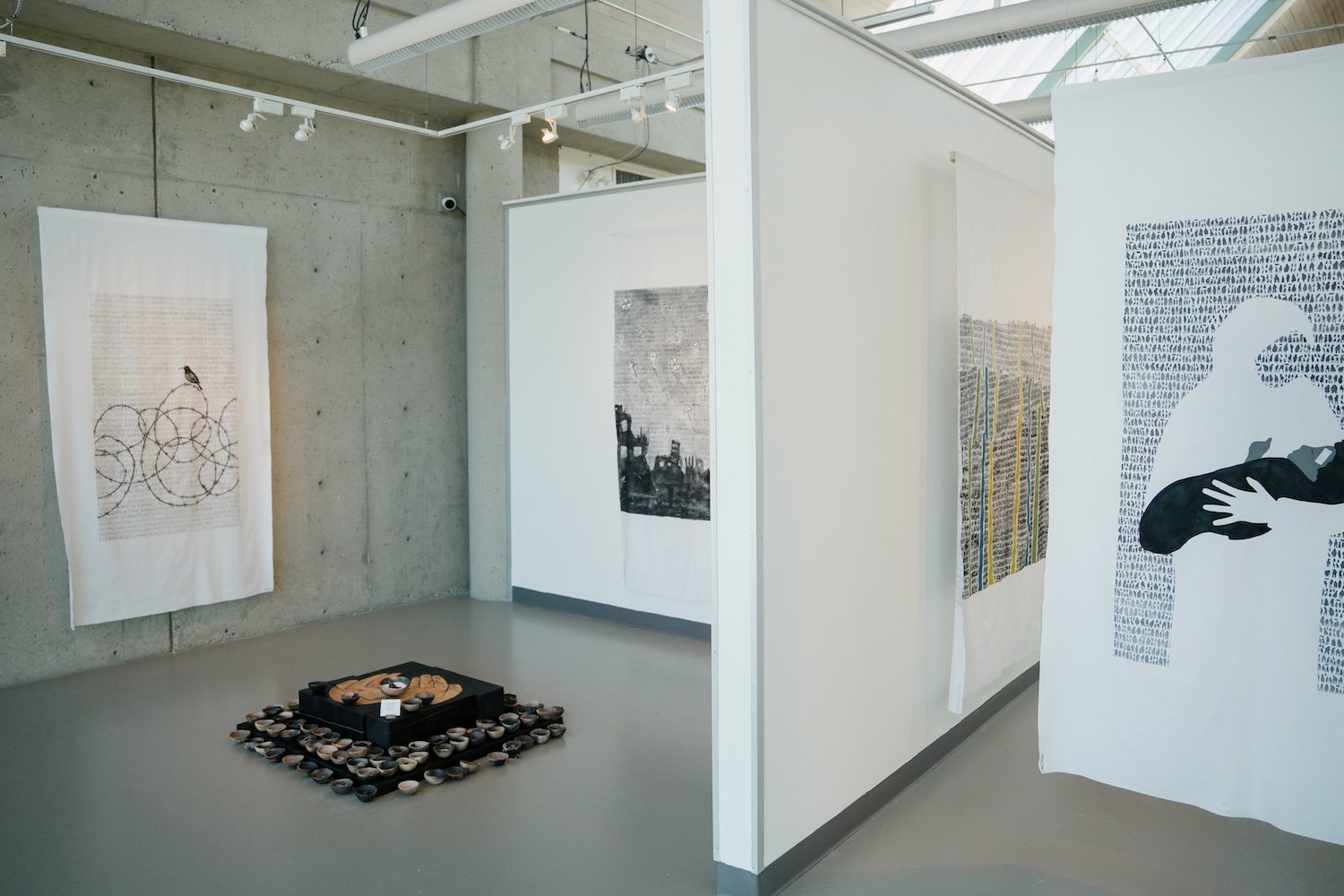
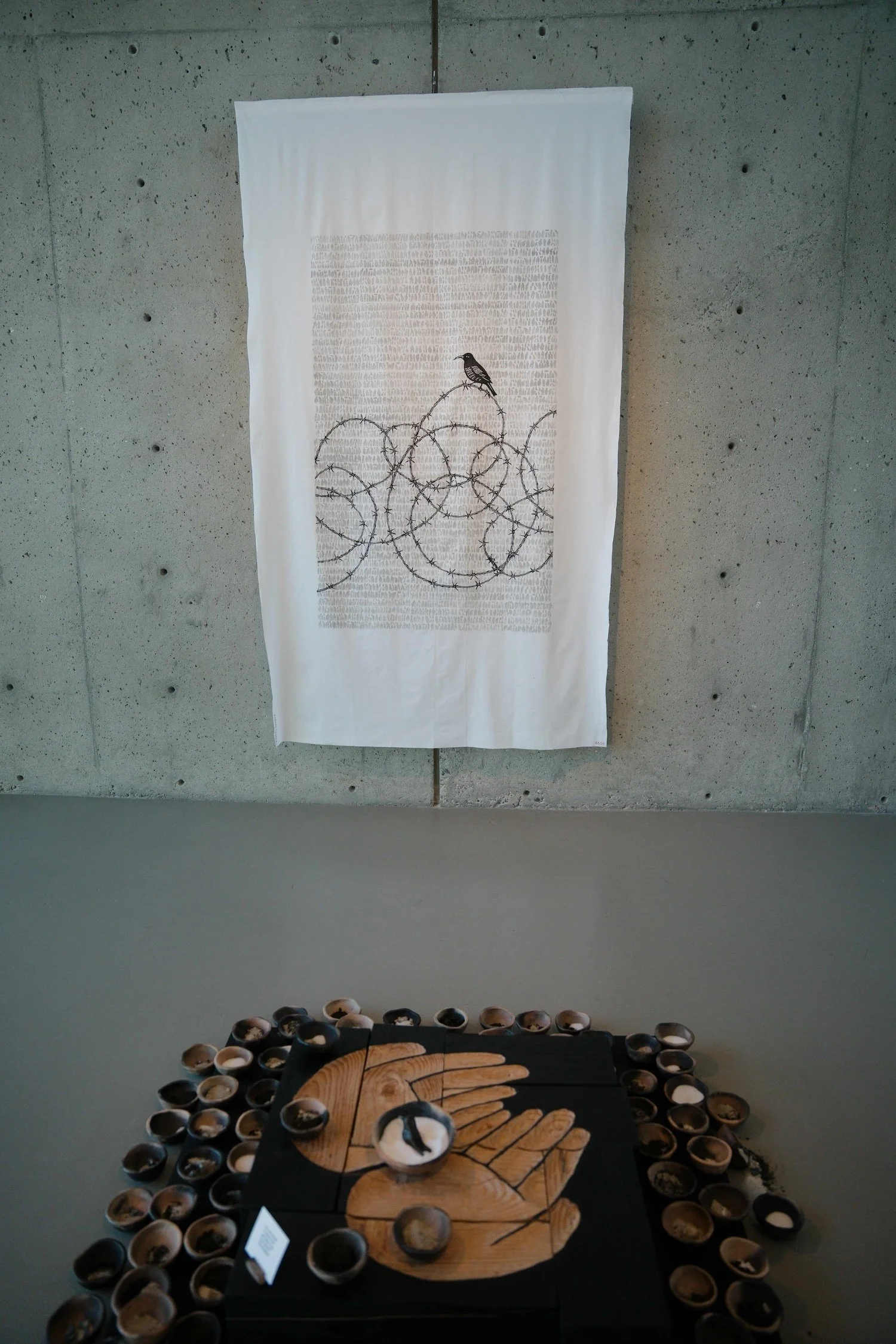
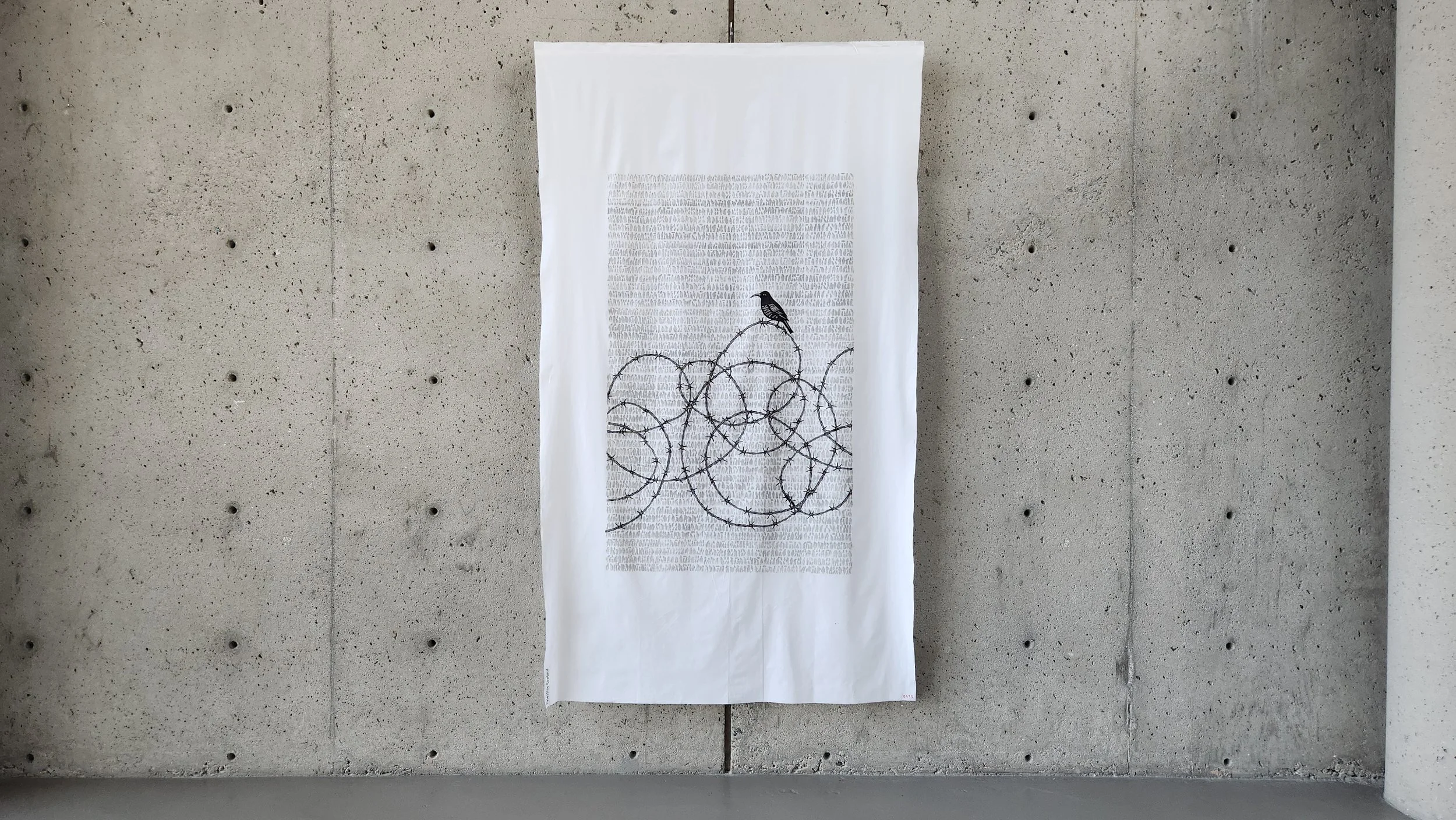
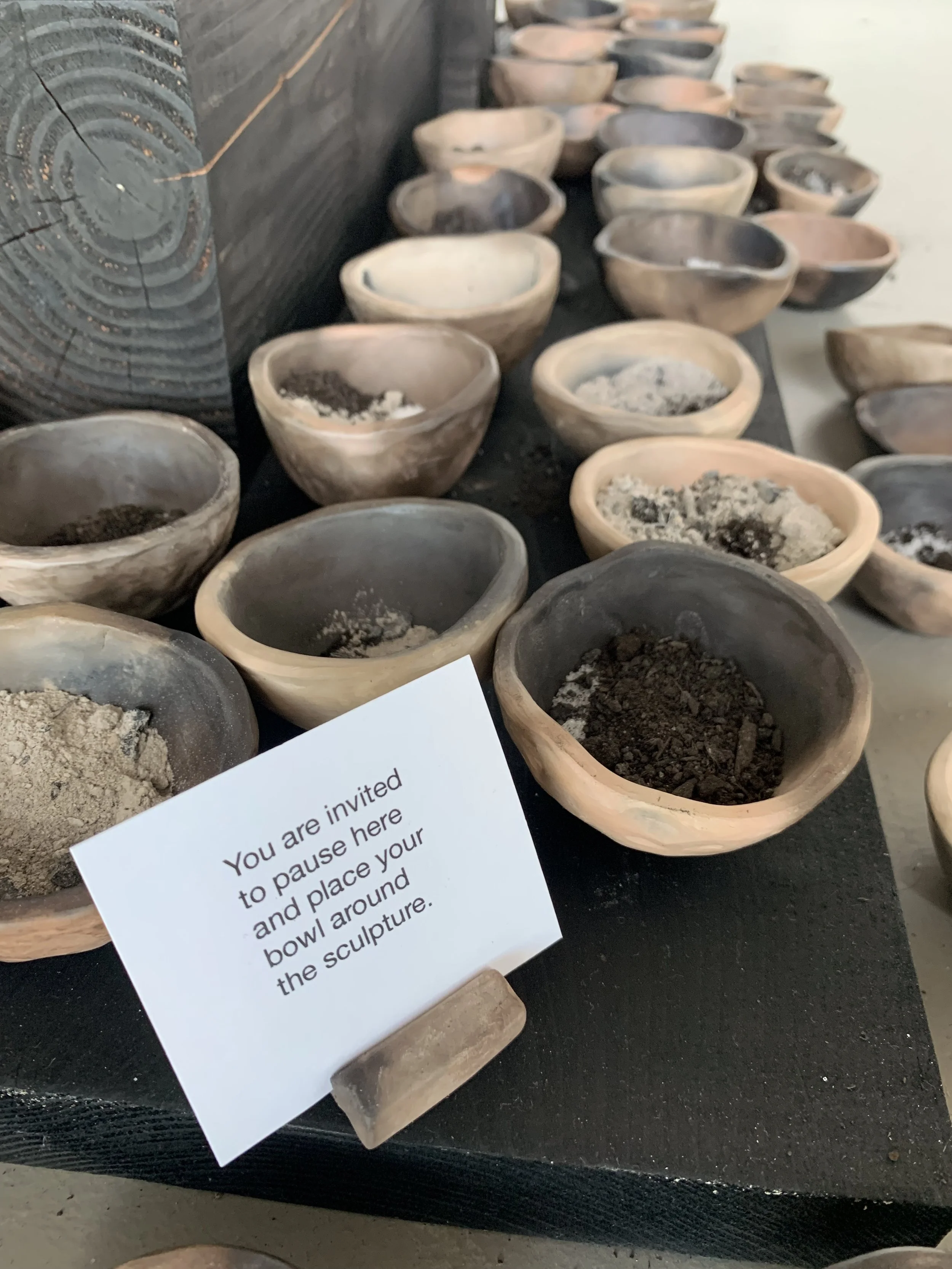
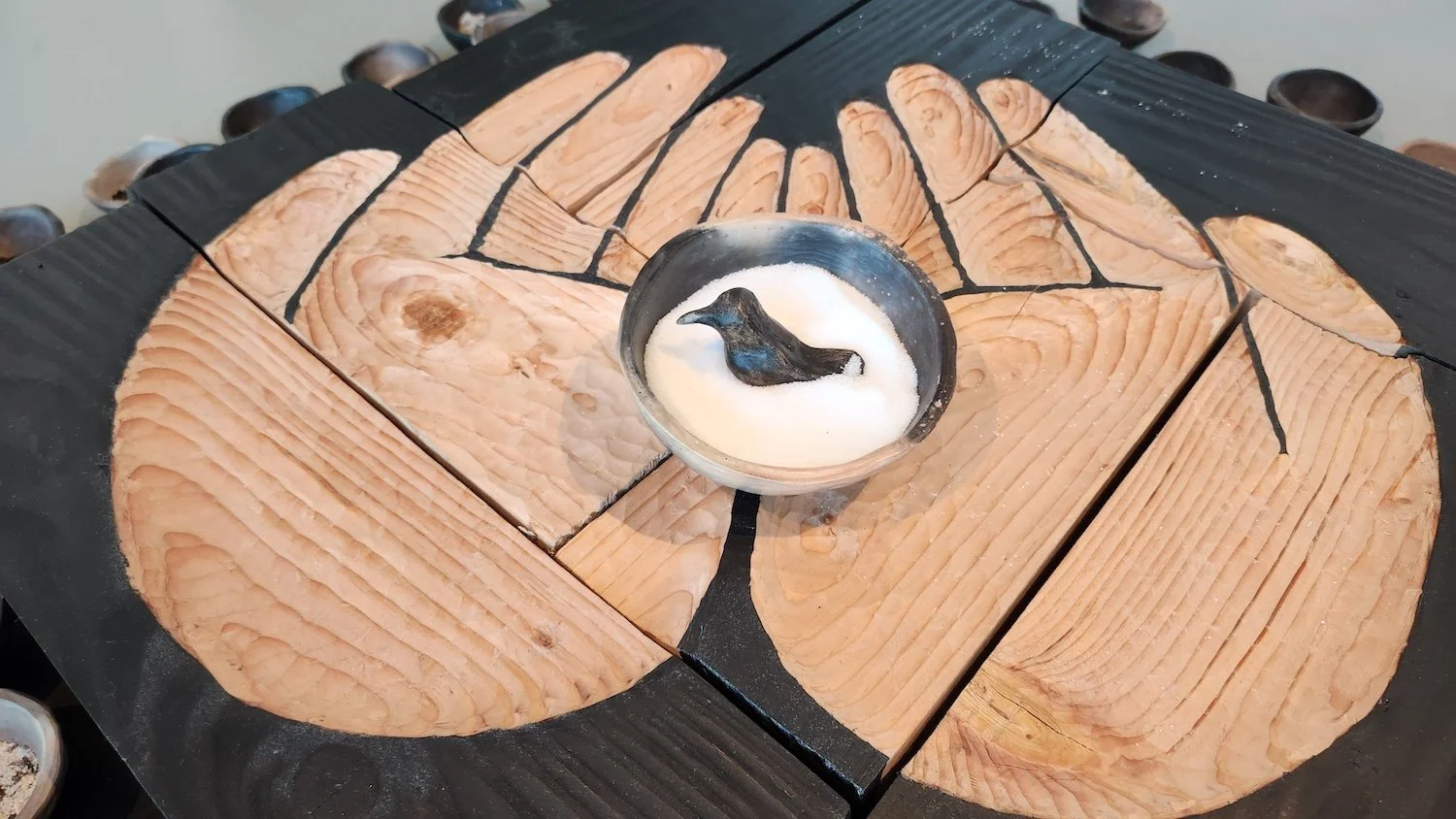
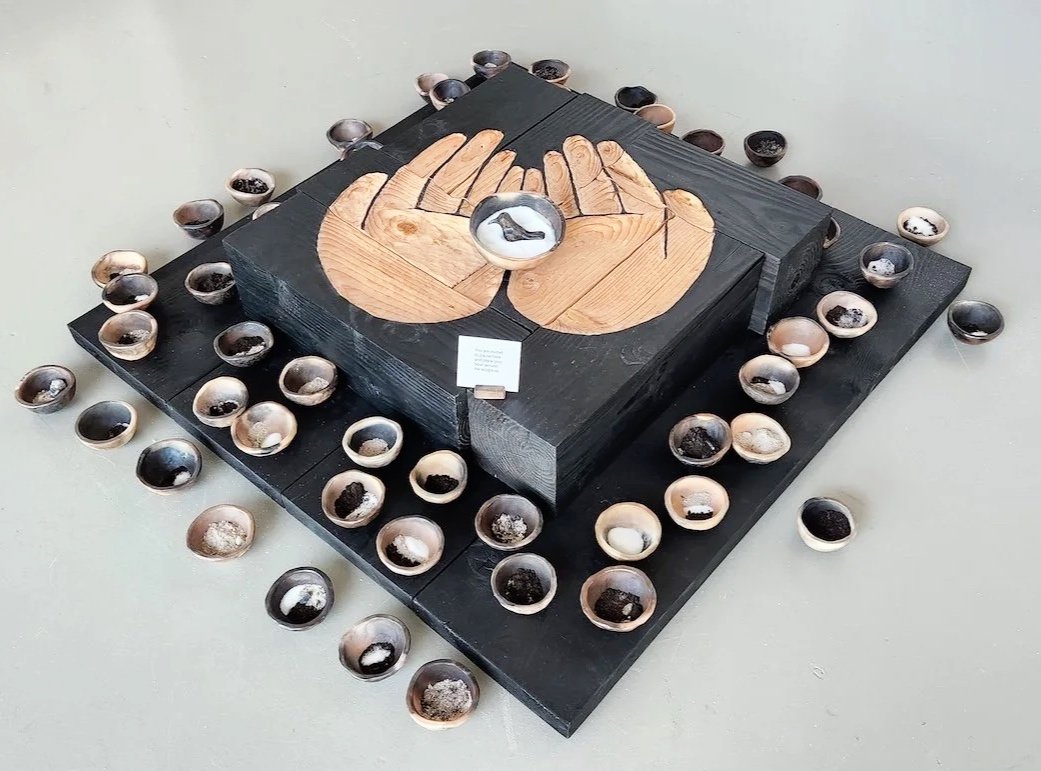
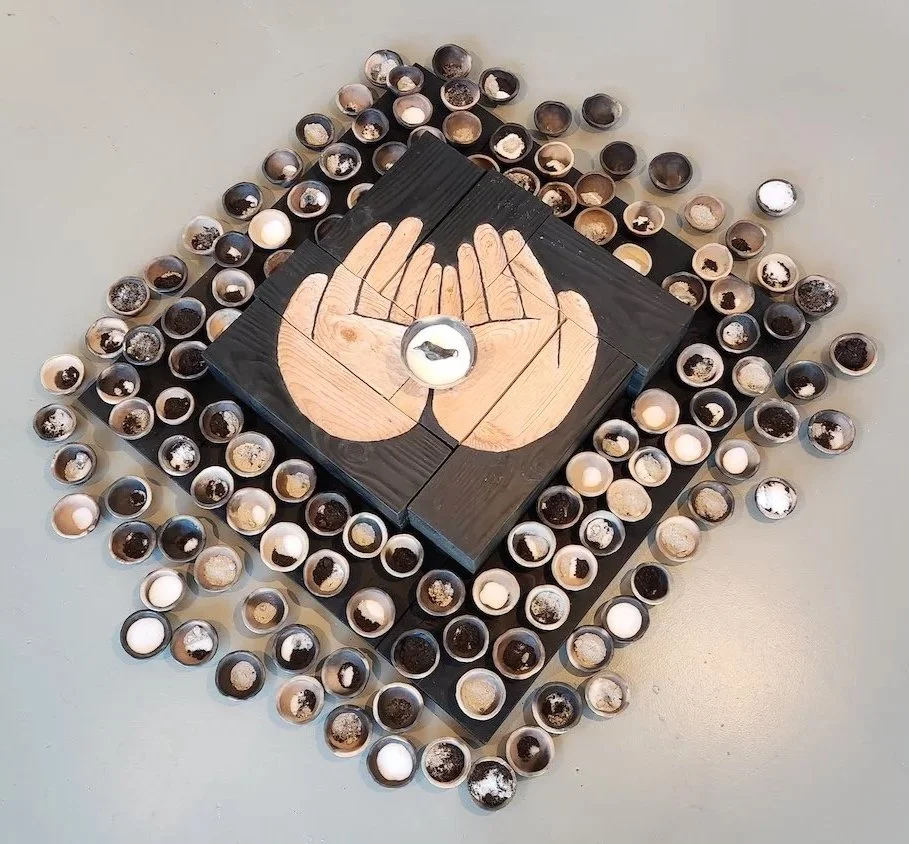
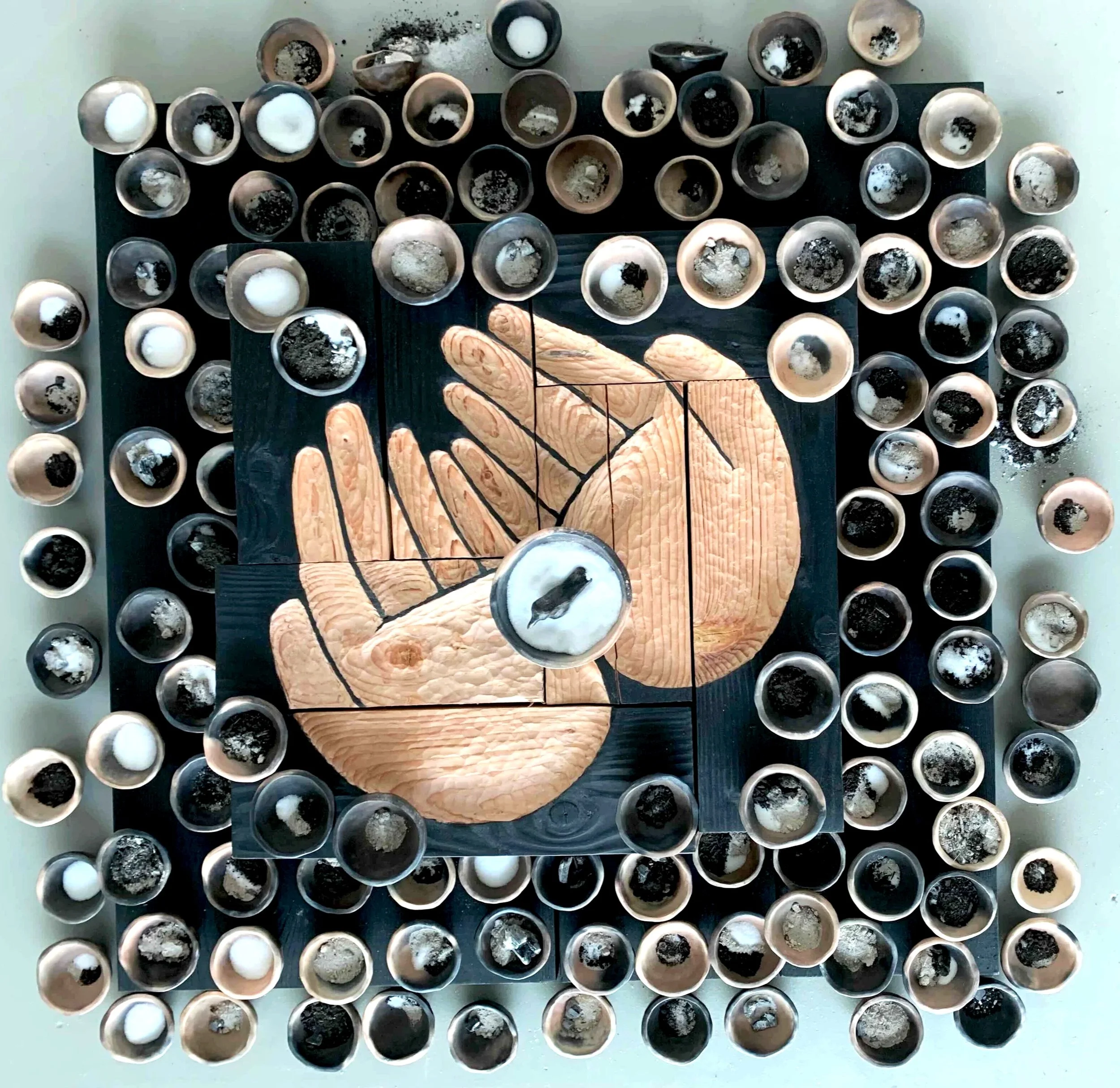
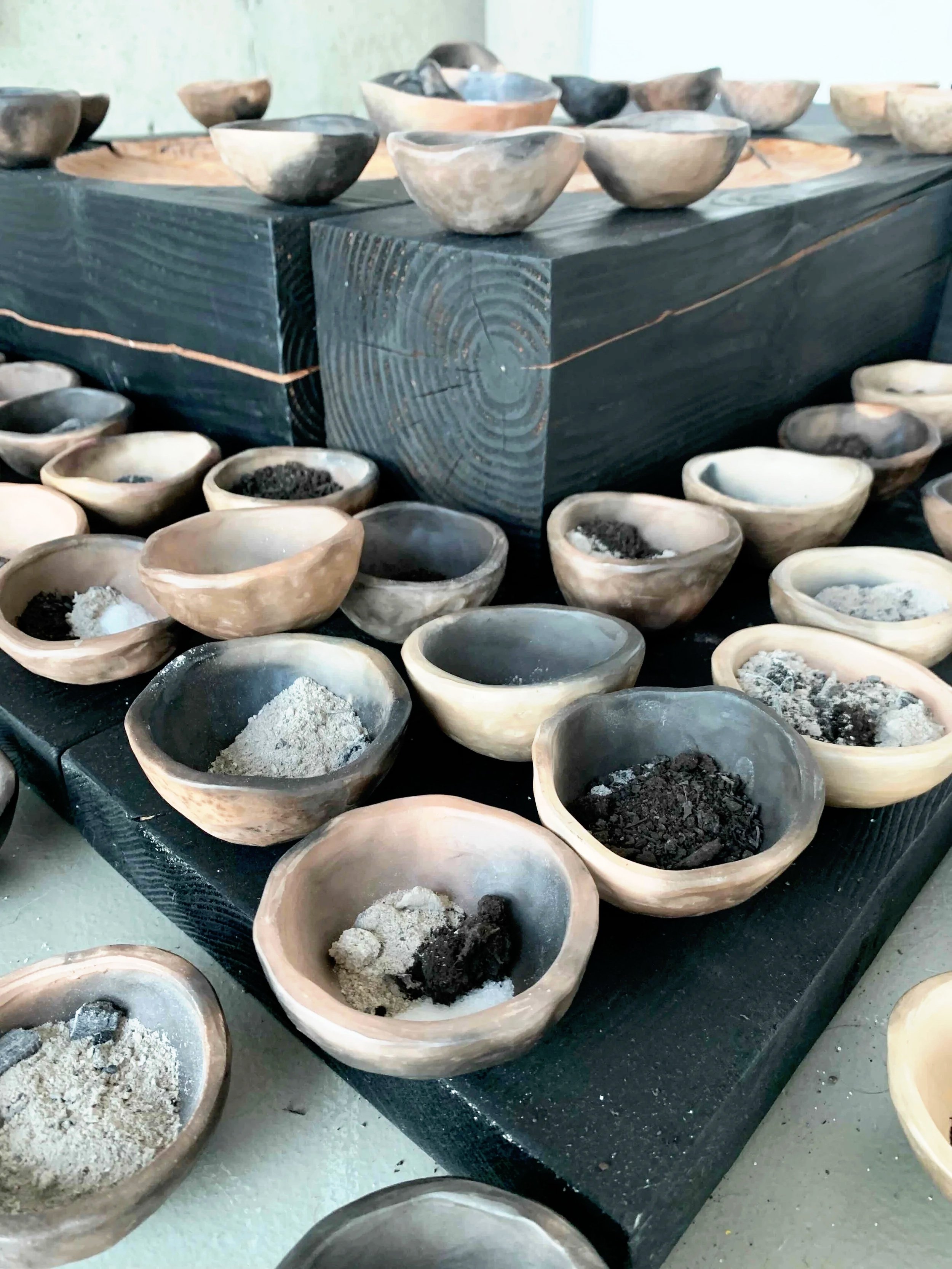
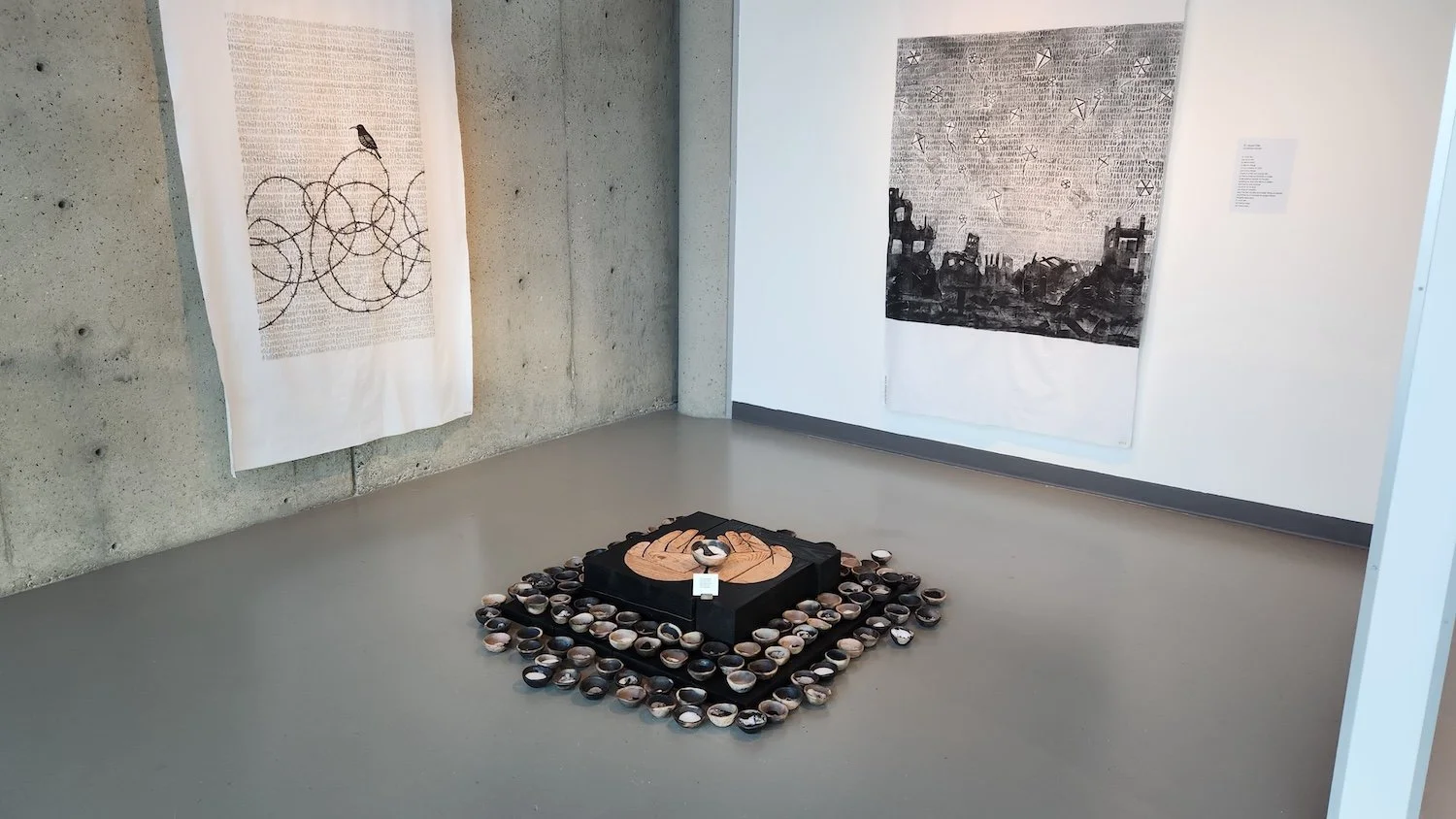
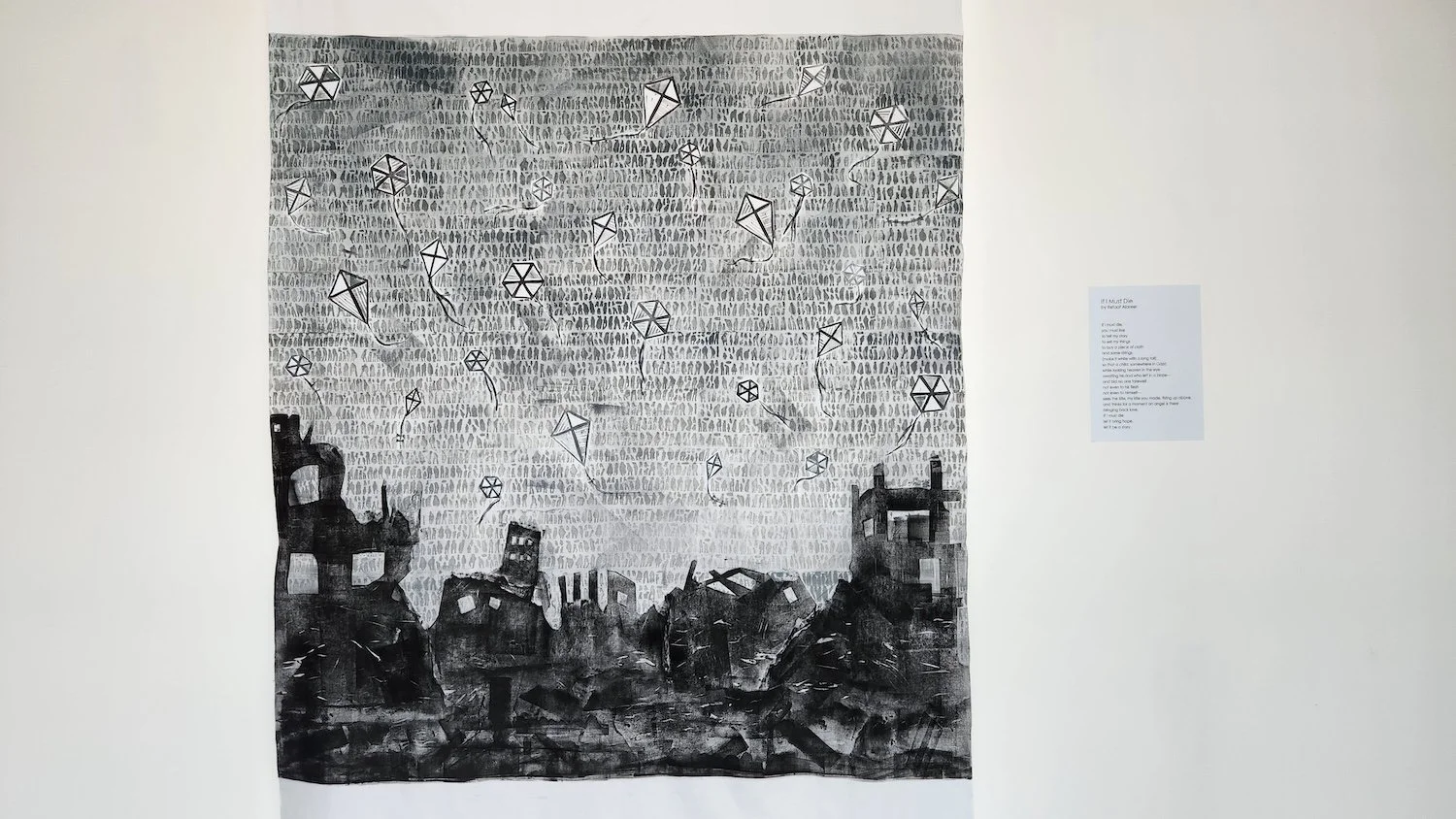
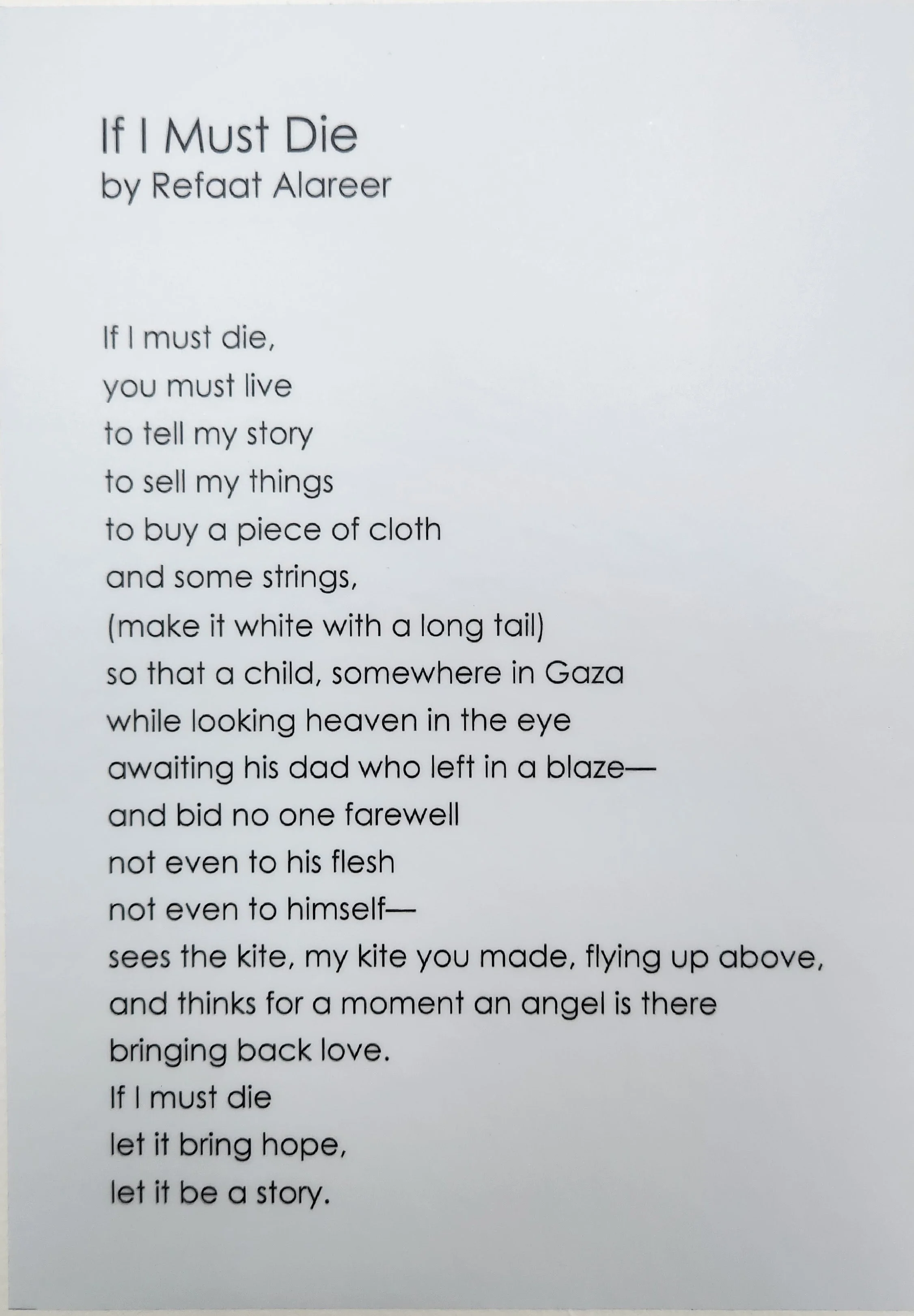
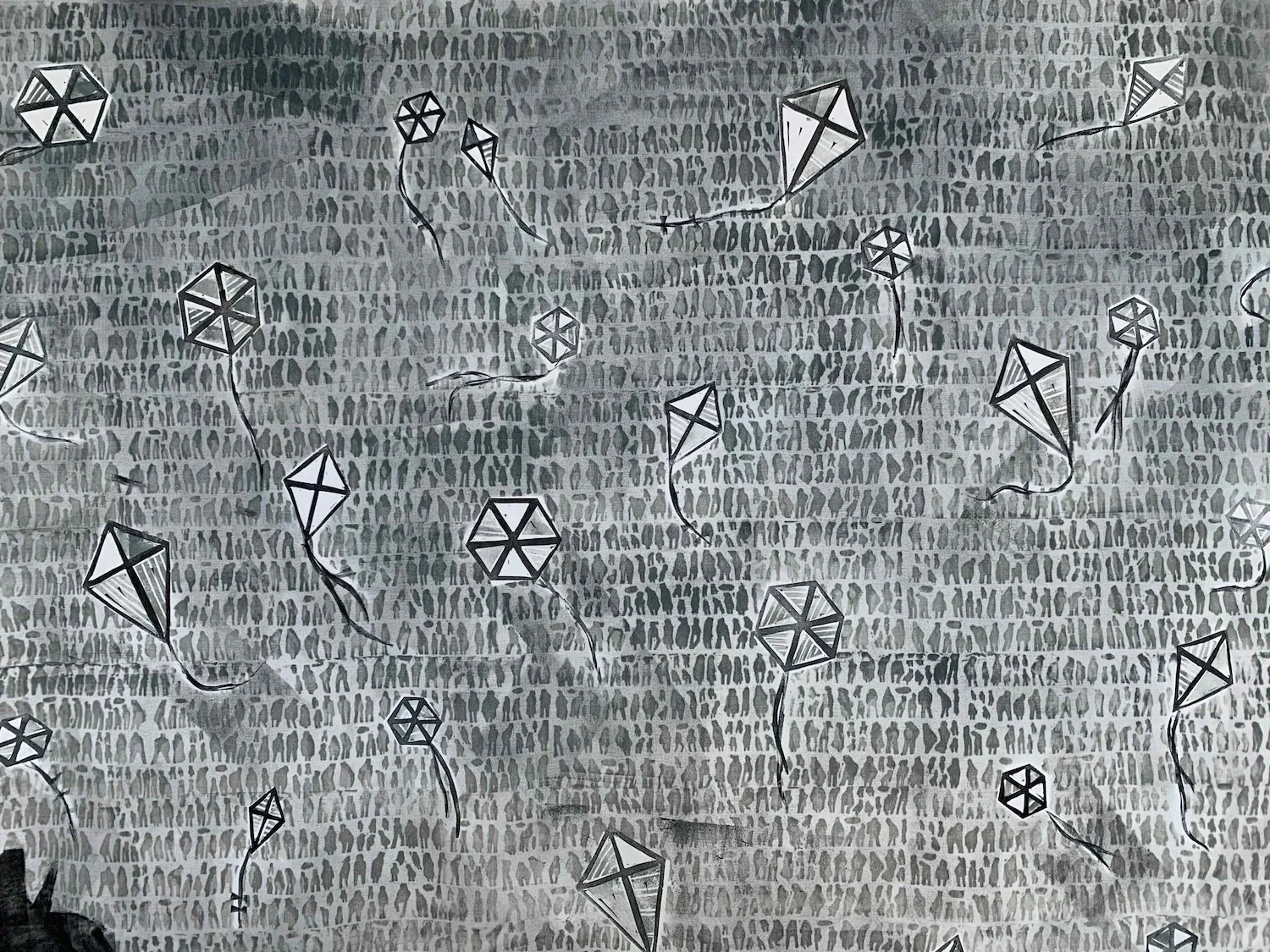

This work began when I started carving tiny figures into printmaking blocks to represent Palestinian lives taken in Gaza over the past three years. Carving small, simple figures gave me a way to acknowledge each person as an individual with a story, even as I tried to grasp the scale of over 65,000 people killed. I carved hundreds of figures and realized I could carve every day, all day, for a year and still not come close to the total. To continue the practice in a way that could hold the scale, I began printing the blocks repeatedly even as the death toll continued to climb. Using the same carved figures as a base, different large-scale pieces on fabric emerged, shaped by the stories and laments emerging from Gaza. This process became the seed of the project: a small attempt to honour each life while wrestling with the unfathomable scope of the genocide.
As I worked, I also wondered what was being eroded within those of us outside Gaza, as we witnessed these horrors through the isolating medium of our screens. Images of deliberate starvation and mass devastation appeared alongside advertisements promising abundance and luxury, a jarring dissonance that left me unsettled. What does it do to our collective humanity to witness such atrocities and scroll on by, even while Palestinians continue to endure daily attacks and loss? What is the impact of witnessing intentional and systematic destruction so closely and yet so disconnectedly at the same time? I grappled, too, with the sheer impossibility of really absorbing or processing this horrific reality as an individual, even as other atrocities unfolded in other parts of the world. At a certain point, the scale exceeds what any individual nervous system can take in, even as we feel compelled to remain attentive. While I created art as my own small response, I found myself wondering how embodied expressions of grief and lament could help us face what we are witnessing, and move through the overwhelm rather than becoming stuck in it, or trying to numb it away.
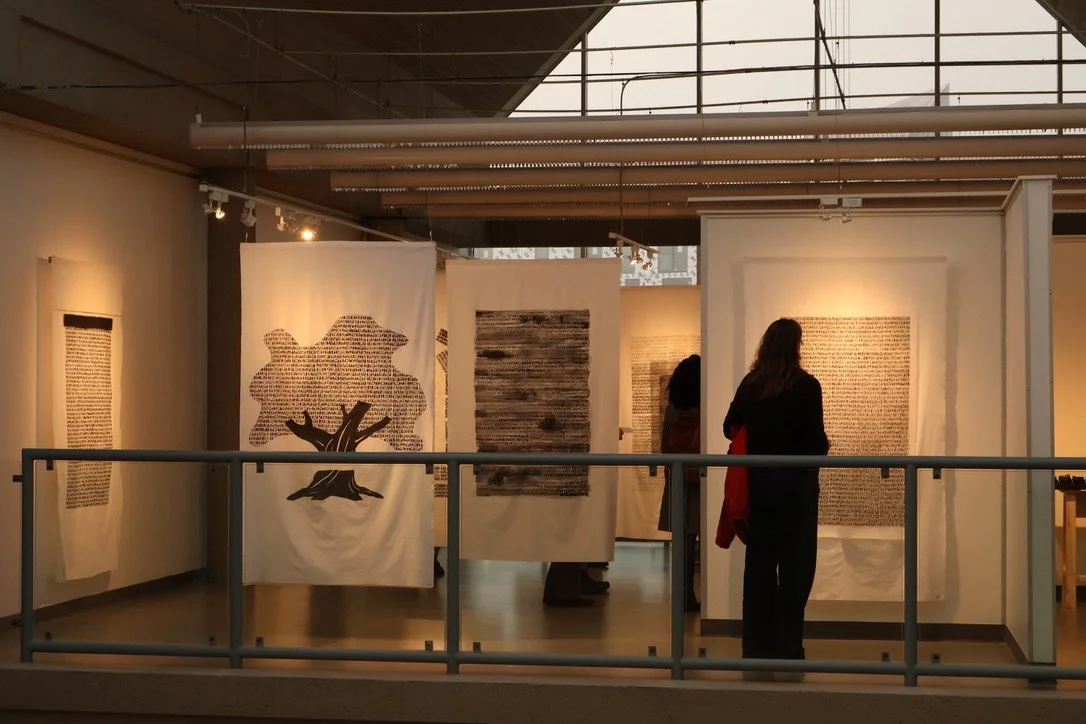
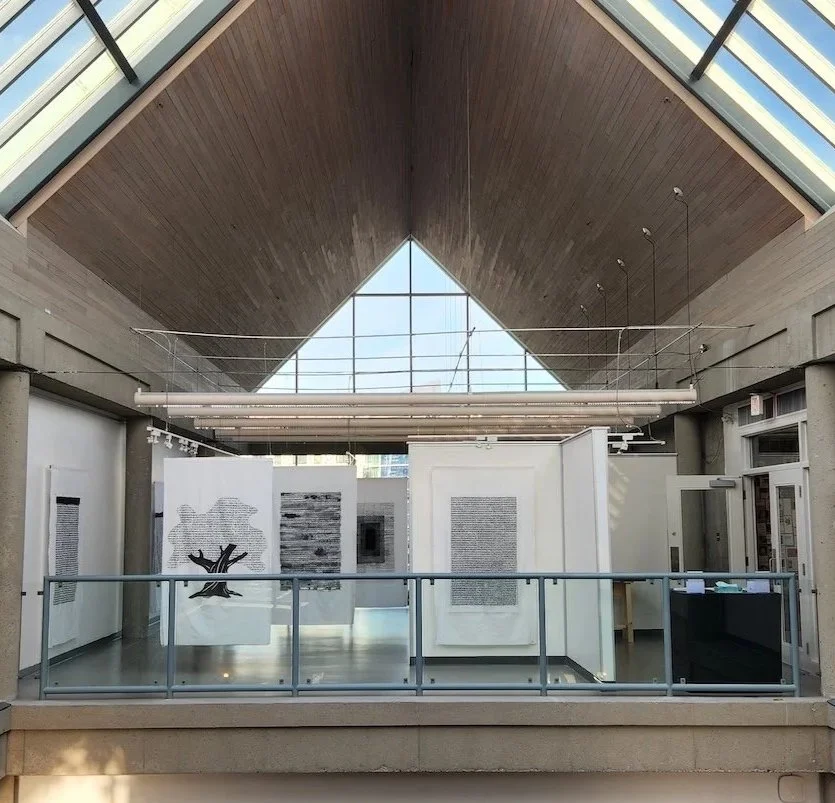
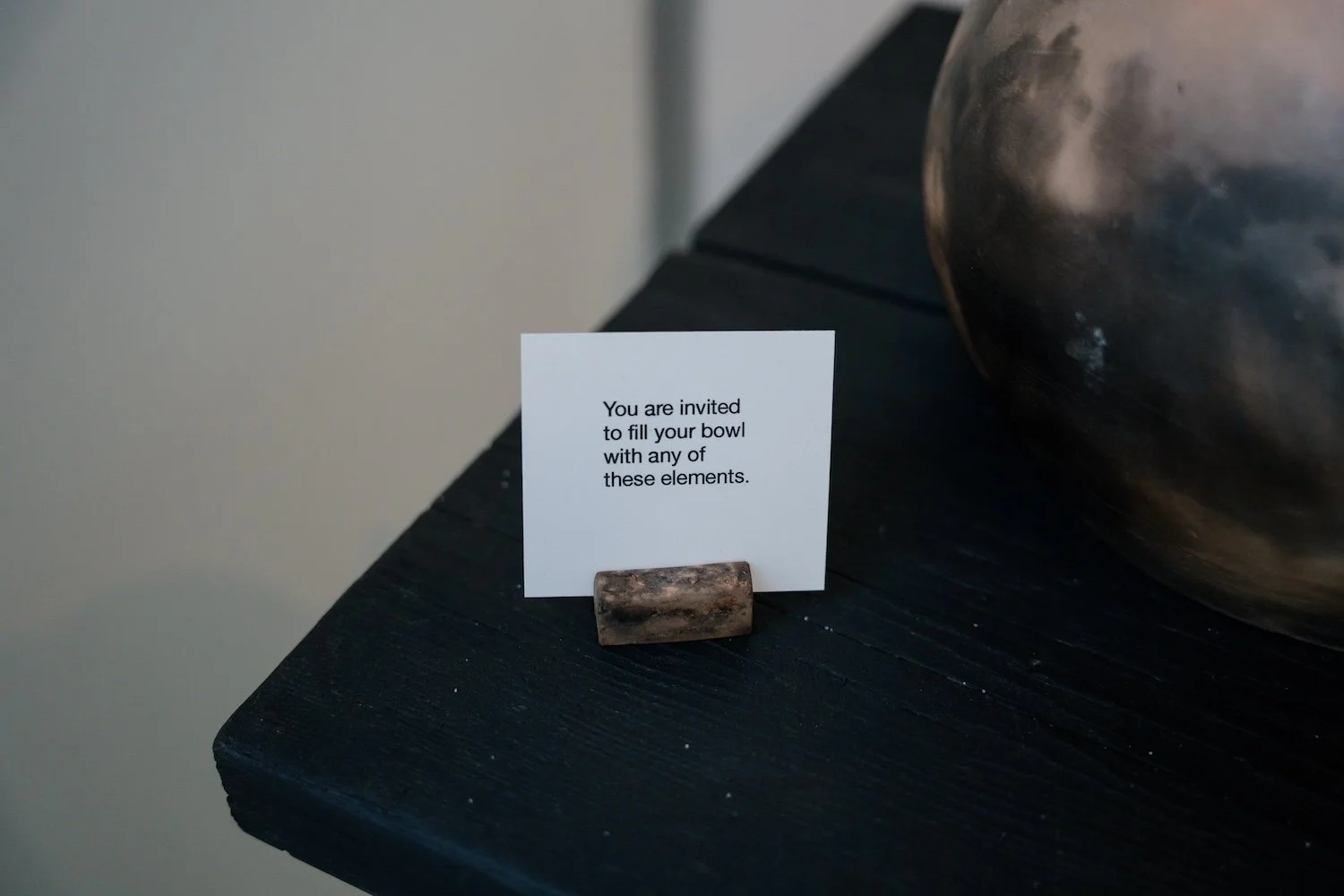
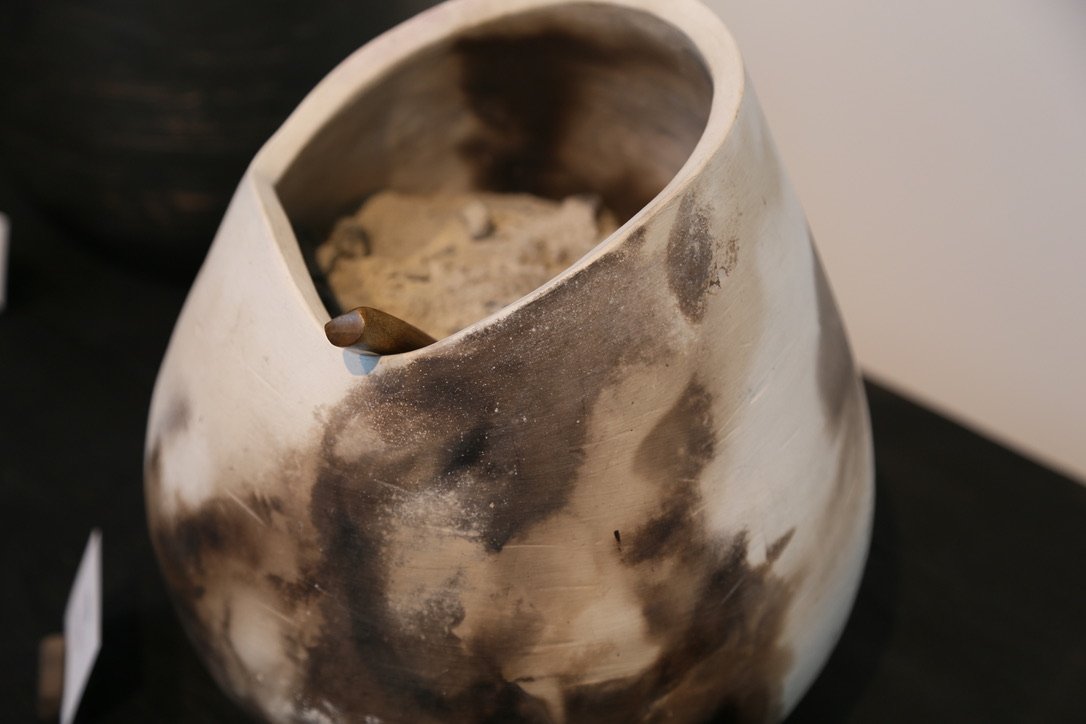
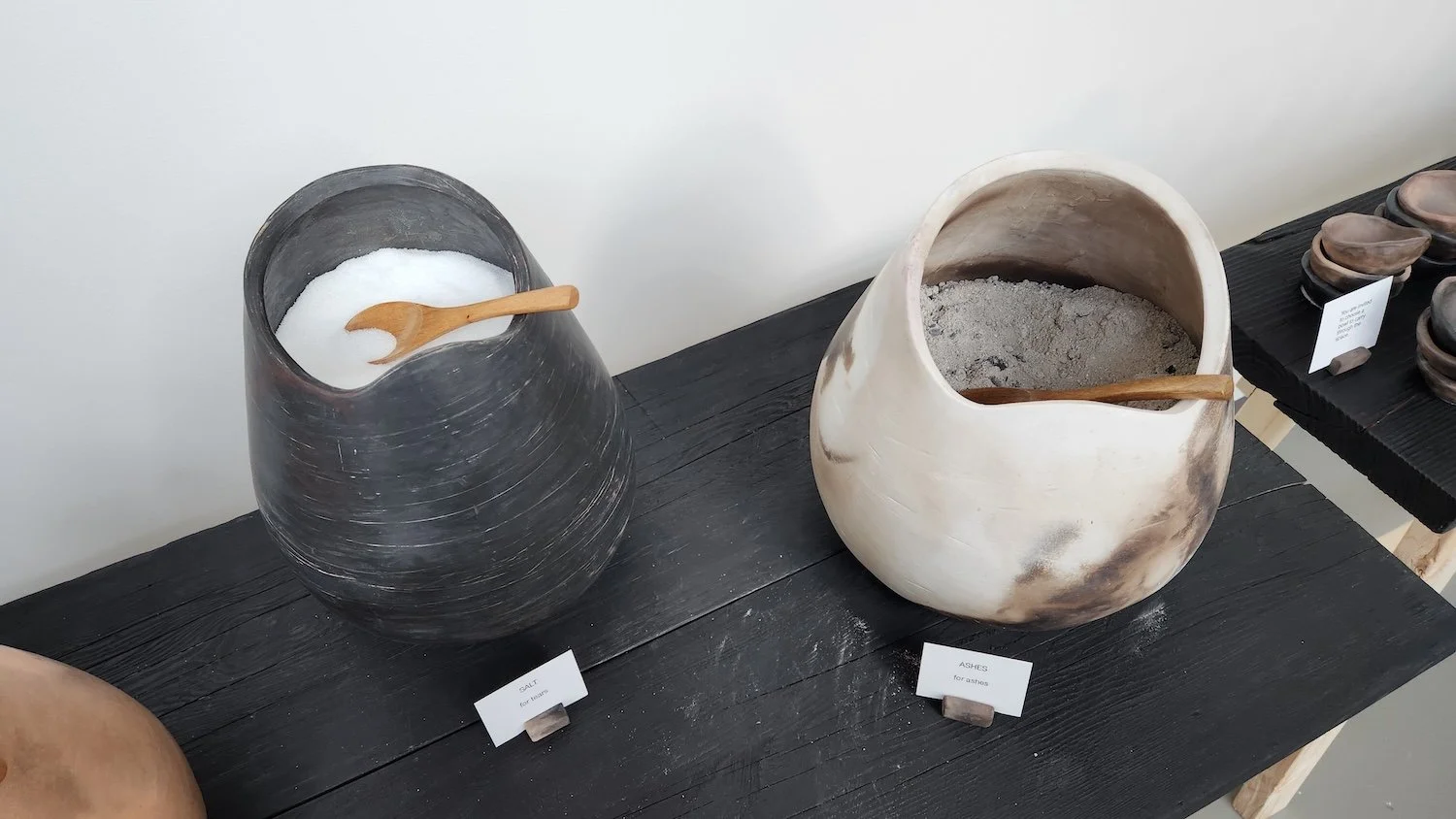
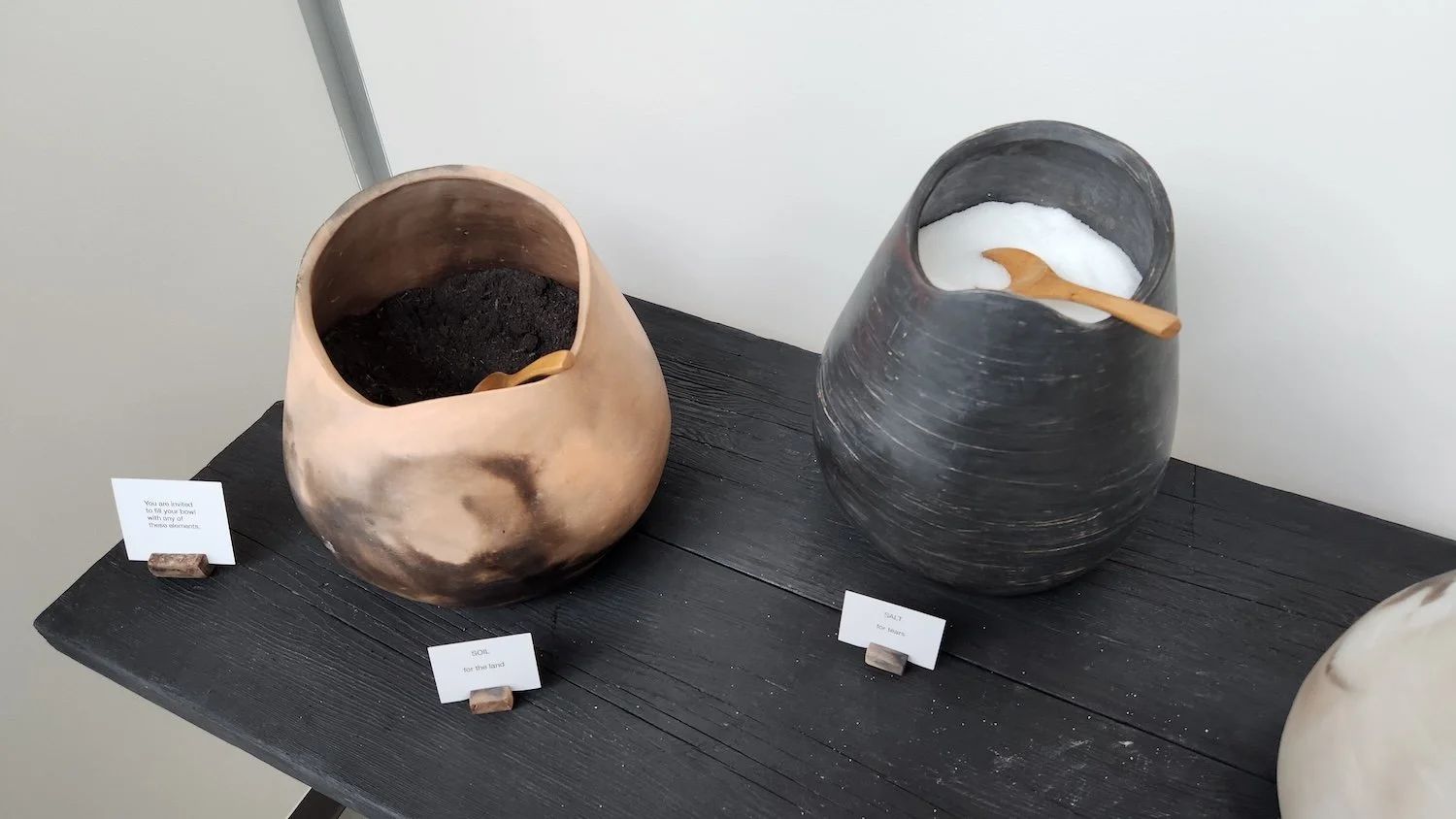
With these questions in mind, the project grew into a participatory installation that brings together printmaking, carved wood, and pit-fired ceramics to create a space for shared lament. White cotton hangings printed with over 65,000 figures form a grief labyrinth to walk through. Each unique hanging expresses aspects of lament or reflects facets of the realities in Gaza. The carved wooden elements and smoke-marked ceramic vessels extend this sense of tactile, material lament shaped by hand, fire, repetition, and sorrow. Visitors are invited, not to attend as spectators, but to move through the space as an act of keeping vigil and bearing witness to the ongoing brutality in Gaza. In a world that often turns away or numbs itself in the face of such violence, shared lament offers a space to pause and reconnect with the wrongness of the injustice we are witnessing. The installation provides an opportunity for participants to engage in collective lament and to attend to the weight of what is happening in Gaza. Perhaps grieving together in this embodied way will open pathways within us and among us for deeper compassion and action.
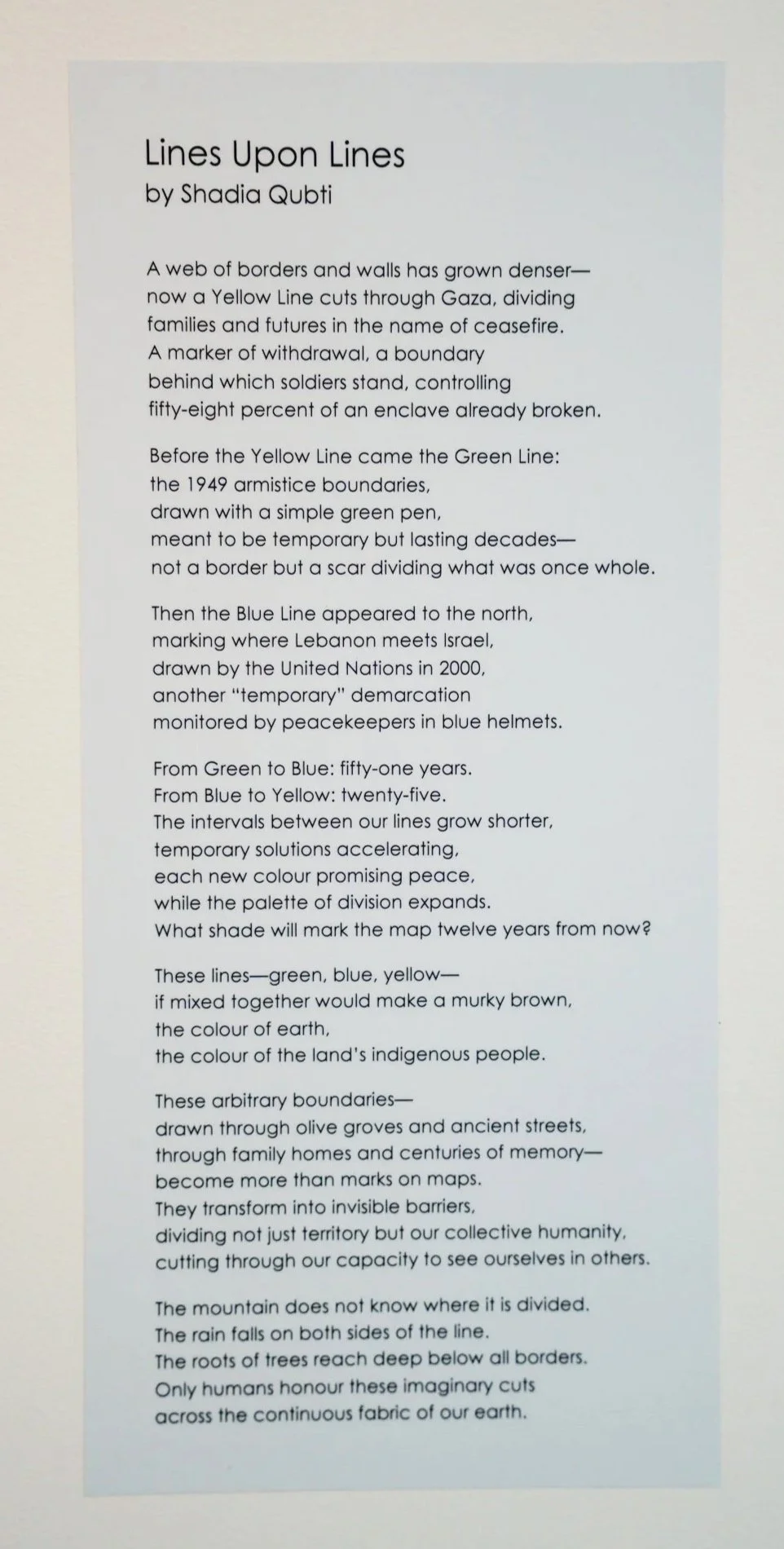
I would like to acknowledge, with deep gratitude, that every single element in this exhibition was created with the help of others. Thank you to the communities, friends, advisers, and activists for the many ways you helped bring this shared lament into being. A special thanks to Shadia Qupti, whose poem, Lines Upon Lines, is included in the exhibition, and whose words and perspective have deeply influenced the work.
If you represent a gallery, arts organization, university, faith community, or other space interested in hosting the work, we’d welcome a conversation about the possibilities.
Bring the Exhibition to Your Community
If you're interested in being part of helping this exhibition travel, or have ideas, connections, or skills that might help make it possible, I'd welcome hearing from you. I hope this work can continue to create space for lament, and contribute in some small way to the struggle for Palestinian freedom and justice.